

By Chioma Vivian James
When a husband passes away, the loss extends far beyond the absence of a companion. For millions of women across the world, widowhood often ushers in a difficult journey marked by emotional pain, economic uncertainty, social exclusion, and, in some cases, outright discrimination. Yet, amid these challenges, widows continue to demonstrate extraordinary resilience, raising families, sustaining communities, and contributing meaningfully to national development.
As Nigeria joins the rest of the world to commemorate the 2026 International Widows’ Day, the Federal Government is renewing its commitment to ensuring that widowhood does not translate into vulnerability, poverty, or social marginalisation. This year’s theme, “Justice, Dignity and Economic Power for Widows,” serves as a powerful call to action for governments, institutions, communities, and citizens to move beyond sympathy and embrace concrete measures that improve the lives of widows.
Leading this advocacy, the Honourable Minister of Women Affairs and Social Development, Hon. Imaan Sulaiman-Ibrahim, fsi, described the occasion as more than a symbolic observance. According to her, it is a reminder that widows are not invisible members of society but vital contributors to family stability, community development, and national progress.
A Global Challenge with Local Realities
The observance of International Widows’ Day traces its roots to a global movement initiated by the Loomba Foundation in 2005 to draw attention to the challenges faced by widows and their children. The campaign gained international recognition when the United Nations General Assembly officially adopted June 23 as International Widows’ Day in 2010, with the first global observance taking place in 2011.
Today, the statistics remain sobering. Globally, more than 258 million women are widows. In Nigeria alone, over two million women are estimated to be living as widows, many carrying the dual burden of caregiving and breadwinning under challenging socio-economic conditions.
For many of these women, the death of a spouse often marks the beginning of new struggles. Beyond grief, some face disinheritance, property seizure, exclusion from family assets, loss of shelter, reduced access to healthcare, and diminished economic opportunities. Others endure harmful traditional practices that violate their dignity and fundamental human rights.
Confronting Harmful Widowhood Practices.
One of the most disturbing realities confronting widows in parts of Nigeria remains the persistence of harmful widowhood rites. These include forced confinement, degrading mourning rituals, accusations surrounding the death of a spouse, property grabbing, disinheritance, and forced remarriage.
The Minister strongly condemned such practices, describing them as inconsistent with justice, equity, and human dignity.
Importantly, these acts are not merely cultural concerns; they are criminal offences under Nigerian law. The Violence Against Persons (Prohibition) Act, 2015 criminalises harmful widowhood practices and provides penalties for offenders. Government agencies continue to strengthen awareness and enforcement mechanisms to ensure that widows can access protection and justice.
Renewed Hope for Widows
Under the administration of President Bola Ahmed Tinubu, the protection of vulnerable populations remains a key component of the Renewed Hope Agenda. This commitment has become even more significant with the declaration of 2026 as the Year of Families and Social Development, recognising the family as the cornerstone of national stability.
The Federal Ministry of Women Affairs and Social Development has continued to implement targeted programmes designed to support widows through economic empowerment, healthcare access, skills acquisition, and social protection.
A notable intervention was the collaboration between the Ministry and Helpline Support for the Needy, which facilitated the enrolment of 17 clusters of widows into the National Health Insurance Scheme. This initiative significantly improved access to healthcare while reducing the financial burden associated with medical expenses.
Beyond healthcare, each cluster received a grant of ₦500,000 to support cooperative businesses and livelihood activities. The intervention has enabled many widows to expand income-generating ventures, strengthen household finances, and embrace innovative approaches such as backyard urban farming, which contributes to food security and improved nutrition.
From Vulnerability to Productivity
Across Nigeria, thousands of widows have benefited from empowerment programmes implemented by the Ministry. These initiatives include vocational training, entrepreneurship development, agricultural support, digital skills acquisition, financial inclusion programmes, cooperative strengthening, and psychosocial support services.
The impact is increasingly visible. Women who once struggled to survive are becoming business owners, cooperative leaders, farmers, and contributors to local economies. Families that faced uncertainty are finding renewed stability. Communities are witnessing women transition from dependence to enterprise and from vulnerability to economic participation.
This transformation reflects a broader vision of inclusive development where women, regardless of their circumstances, have access to opportunities that allow them to thrive.
Building a Movement for Inclusion
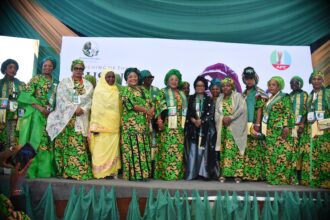
The Ministry’s efforts also align with its flagship National Women Mega Empowerment and Rally initiative, themed “The Power of 10 Million: One Voice. One Movement. One Choice.”
The platform seeks to mobilise women across the country—including widows—into a coordinated movement focused on economic empowerment, social inclusion, leadership, and national development.
By creating opportunities for participation and engagement, the initiative aims to ensure that widows are not merely beneficiaries of support programmes but active partners in shaping Nigeria’s future.
A Collective Responsibility
While government interventions remain essential, achieving lasting change requires the collective commitment of society. Traditional rulers, religious leaders, civil society organisations, development partners, the private sector, and citizens all have critical roles to play.
Eliminating harmful practices, protecting inheritance rights, promoting financial inclusion, and expanding economic opportunities for widows are responsibilities that must be shared across all sectors.
As Nigeria marks the 2026 International Widows’ Day, the message is clear: widowhood should never be a pathway to poverty, exclusion, or despair. Instead, it should be met with compassion, protection, opportunity, and empowerment.
For millions of widows across the country, the future envisioned under the Renewed Hope Agenda is one where loss does not define destiny. It is a future where justice replaces discrimination, dignity overcomes stigma, and economic power creates pathways to independence and prosperity.
Above all, it is a future where every widow is seen, valued, protected, and empowered to contribute fully to the nation’s development.
“Widowhood should never become a sentence to poverty, exclusion, discrimination, or despair. Every widow deserves justice, dignity, and the opportunity to thrive”.