
Chioma Vivian James
Nigeria has reaffirmed its commitment to upholding international humanitarian law, protecting human rights, and ensuring justice for victims of misconduct linked to past peacekeeping operations, as it moves to deepen strategic collaboration with the United Nations.
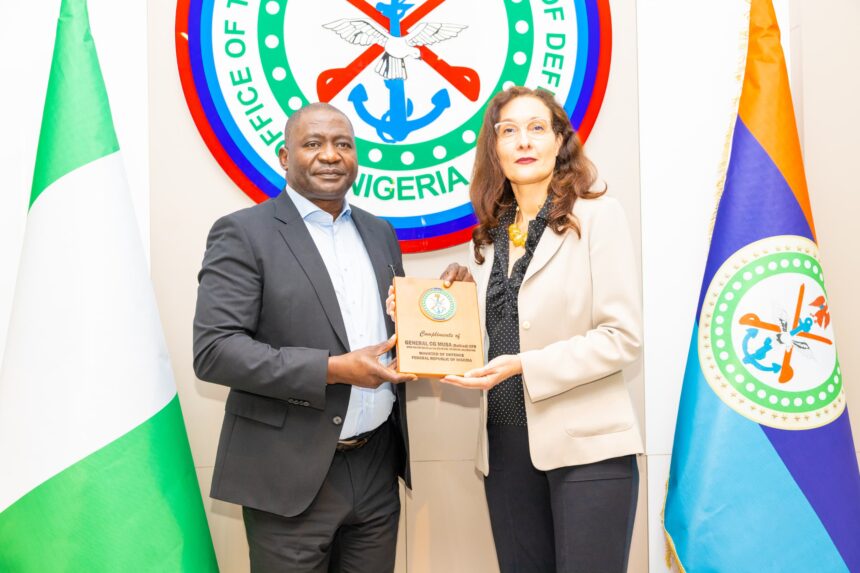
The renewed commitment was made by the Honourable Minister of Defence, General Christopher Gwabin Musa (rtd), OFR, during a high-level diplomatic engagement with the United Nations Assistant Secretary-General and Victims’ Rights Advocate, Najla Nassif Palma, and her delegation at the Ship House, Abuja.
The meeting underscored Nigeria’s determination to align military operations with globally accepted human rights standards while strengthening accountability mechanisms and support systems for victims affected by historical peacekeeping missions.
General Musa highlighted the Federal Government’s sustained efforts to address legacy concerns arising from foreign peacekeeping deployments, particularly issues relating to paternity claims connected to past missions in Liberia. He noted that government institutions have established comprehensive frameworks aimed at ensuring transparency, accountability, and timely resolution of outstanding cases.
According to the Minister, Nigeria remains committed to providing an open and effective communication channel that will facilitate the prompt resolution of long-standing claims and bring closure to affected individuals and families.
“Our commitment to justice, human dignity and international best practices remains unwavering. Nigeria will continue to work closely with the United Nations and relevant stakeholders to ensure that legitimate concerns are addressed fairly and transparently,” General Musa stated.
The Defence Minister further reaffirmed the Armed Forces of Nigeria’s dedication to operating within the provisions of international humanitarian law and the principles governing the protection of civilians and vulnerable populations during military engagements.
In her remarks, Ms. Palma disclosed that 42 legacy cases are currently under review by the United Nations. She appealed for continued cooperation from the Nigerian government to facilitate justice, accountability and meaningful closure for victims.
She also revealed that some of the affected individuals have expressed interest in acquiring Nigerian citizenship, a development she said reflects their desire for identity, belonging and recognition.
The UN official commended Nigeria’s willingness to engage constructively on sensitive issues and stressed the importance of sustained collaboration in advancing victims’ rights and strengthening institutional accountability.
The strategic engagement culminated in an agreement by both parties to institutionalise a stronger partnership focused on human rights promotion, victims’ rights advocacy and capacity development within the security sector.
Under the proposed framework, Nigeria and the United Nations will collaborate on specialised training programmes, technical workshops, policy dialogues and advanced capacity-building initiatives aimed at further integrating human rights principles into the operational doctrine, training curriculum and field activities of the Armed Forces of Nigeria.
Observers view the development as a significant step toward reinforcing Nigeria’s reputation as a responsible contributor to global peacekeeping efforts while demonstrating its readiness to confront legacy issues through dialogue, accountability and justice.
The strengthened partnership is also expected to enhance institutional safeguards, promote professionalism within the military, and deepen confidence between Nigeria and international partners working to uphold human rights and the rule of law.
As Nigeria continues to play a prominent role in regional and international peace support operations, the collaboration signals a renewed commitment to ensuring that the protection of human dignity remains central to military service and national security objectives.