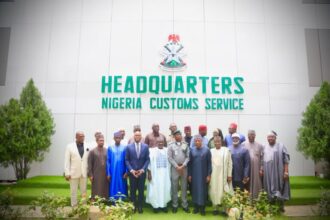


The Nigeria Customs Service (NCS) is strengthening its position as one of Africa’s most progressive customs administrations through a deliberate investment in human capital development, a strategy that is rapidly becoming the cornerstone of its ongoing reform and modernisation agenda.
This commitment was highlighted at the 17th Session of the World Customs Organisation (WCO) Capacity Building Committee in Brussels, where the National Public Relations Officer of the Service, Deputy Comptroller Abdullahi Aliyu Maiwada, presented Nigeria’s reform experience before customs leaders and experts from across the world.
Speaking at the high-level gathering, Maiwada noted that the Nigeria Customs Service has moved beyond the traditional practice of merely reporting training activities to demonstrating tangible outcomes and measurable impacts on operational efficiency, trade facilitation and revenue generation.
According to him, the Service’s reform communication framework is strategically designed around three critical pillars: institutional capacity building, human resource development and stakeholder engagement. These pillars, he explained, ensure that reforms are not only implemented effectively but are also understood, embraced and trusted by both officers and stakeholders.
He pointed to several flagship initiatives that have benefited from sustained capacity development and strategic communication, including the Time Release Study, Advance Ruling system and the Authorised Economic Operator (AEO) programme.
One of the most significant milestones recorded by the Service is the successful certification of about 120 companies under the AEO programme. In addition, more than 3,270 Customs officers across the country have been trained as AEO Champions, creating a robust network of professionals equipped to drive compliance, facilitate trade and enhance operational excellence.
Maiwada stressed that these achievements align with the vision of the Comptroller-General of Customs, Bashir Adewale Adeniyi, MFR, whose administration has consistently prioritised human capital development as a key pillar of Customs modernisation.
Under the current leadership, the Service has expanded its training portfolio to include emerging and highly specialised fields such as Artificial Intelligence (AI), digital revenue management, image analysis, post-clearance audit, risk management and other technology-driven competencies. These initiatives are designed to prepare officers for the rapidly evolving demands of global commerce, border management and international trade security.
Industry observers note that the Customs Service’s emphasis on people development represents a significant shift from traditional enforcement-focused models to a more knowledge-driven and innovation-oriented institution. By investing in the skills, expertise and professionalism of its workforce, the Service is positioning itself to respond effectively to the complexities of modern trade while maintaining robust revenue collection and border protection functions.
The NCS also acknowledged the critical role of partnerships with international organisations, development agencies and global customs institutions in supporting its transformation journey. Such collaborations have enabled access to global best practices, technical assistance and capacity-building opportunities that continue to strengthen the Service’s operational capabilities.
As global trade becomes increasingly digital and interconnected, the Nigeria Customs Service believes that sustained investment in human capital will remain essential to achieving its long-term objectives. The Service maintains that a smarter, more professional and technology-driven workforce is crucial to delivering efficient customs administration, facilitating legitimate trade and enhancing Nigeria’s competitiveness in the global marketplace.
With thousands of officers already trained and modernisation programmes gaining traction, the NCS is demonstrating that the future of Customs administration lies not only in technology and infrastructure but also in the knowledge, competence and dedication of its people.