
By Chioma Vivian James
The Nigeria Union of Journalists (NUJ), FCT Council, has urged media’s and practitioners across Nigeria to embrace ethical, child-sensitive, and trauma-informed reporting as part of efforts to combat the recruitment and use of children in armed conflict and other forms of violence.
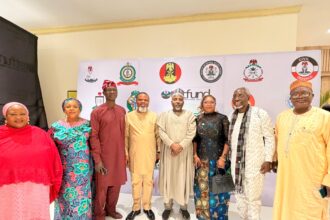
The call was made during a high-level workshop held in Abuja and jointly organised by the NUJ FCT Council, the Dallaire Institute for Children, Peace and Security, and Journalists for Human Rights (JHR). The event brought together journalists, diplomats, development partners, and child protection advocates to examine the media’s role in safeguarding vulnerable children affected by conflict.
Representing the Chairperson of the NUJ FCT Council, Comrade Grace Ike, the Council Treasurer, Comrade Sandra Chukwugekwu, emphasized the critical role of the media in shaping public discourse, influencing policy decisions, and promoting accountability on child protection issues.
“The media has a central role to play in addressing this crisis,” she said. “As journalists, we shape public awareness, influence policy debates, and hold institutions accountable.”
She warned against sensational reporting that could further traumatize affected children or expose them to additional risks, urging journalists to adopt reporting approaches that prioritize the dignity, privacy, safety, and rights of children.
According to her, responsible journalism can play a significant role in preventing child recruitment by shedding light on the underlying factors that make children vulnerable, including poverty, lack of access to education, family disintegration, displacement, and social exclusion.
“We can help prevent recruitment by telling accurate, sensitive stories that highlight root causes such as poverty, lack of education, family breakdown, and social marginalisation,” she added.
Comrade Chukwugekwu further stressed that tackling the recruitment and exploitation of children requires a coordinated, multi-sectoral approach involving government institutions, security agencies, civil society organisations, international partners, and the media.
“Preventing the recruitment and use of children requires coordinated action across sectors,” she noted.
Speaking at the workshop, the Country Representative of the Dallaire Institute for Children, Peace and Security, Mrs. Offiong Nsa, described journalists as indispensable partners in exposing recruitment networks, raising public awareness, and reshaping perceptions about children affected by armed conflict.
“You are not merely chroniclers of conflict. You are powerful human rights advocates,” she said. “Through ethical, child-centred reporting, you can expose recruitment networks and shift the narrative from perpetrators to vulnerable victims.”
She explained that the training programme was designed to equip journalists with practical, trauma-informed reporting tools that would enable them to cover sensitive child protection issues responsibly while minimizing harm to survivors and affected communities.
Also speaking, the Africa Programme Director of Journalists for Human Rights, Mr. Mustapha Dumbuya, highlighted the organisation’s work across the continent in advancing human rights through media development, capacity building, and public-interest journalism.
He noted that the workshop aims to strengthen journalists’ professional competencies in ethical reporting, safety in conflict environments, fact-based storytelling, and responsible use of digital platforms.
“We believe media is a critical entry point for advancing human rights and holding duty-bearers accountable,” he said.
Representing the High Commissioner of Canada to Nigeria, Counsellor (Political), Mr. Omar Alihashi, reaffirmed Canada’s commitment to global efforts aimed at protecting children from the devastating consequences of armed conflict.
He explained that Canada continues to support international initiatives guided by the Vancouver Principles, which focus on preventing the recruitment and use of child soldiers while strengthening protection mechanisms for vulnerable children.
“Journalists play a particularly important role through accurate, ethical and responsible reporting,” he said. “This workshop reflects our shared commitment to prevention, partnership and knowledge sharing.”
Organisers disclosed that the capacity-building programme will continue over the coming days, featuring sessions on child-centred reporting, trauma-informed journalism, digital ethics, gender-sensitive reporting, and best practices for covering conflict-related issues involving children.
The workshop underscores the growing recognition of the media’s vital role in advancing child protection, promoting human rights, and ensuring that the experiences of vulnerable children are reported with accuracy, sensitivity, dignity, and compassion.