
NCS chief pledges stronger trade facilitation, revenue mobilisation and border efficiency as Nigeria shifts from policy promises to measurable economic transformation
By Chioma Vivian James | Thursday, October 8, 2026
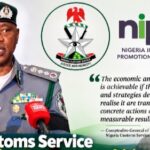
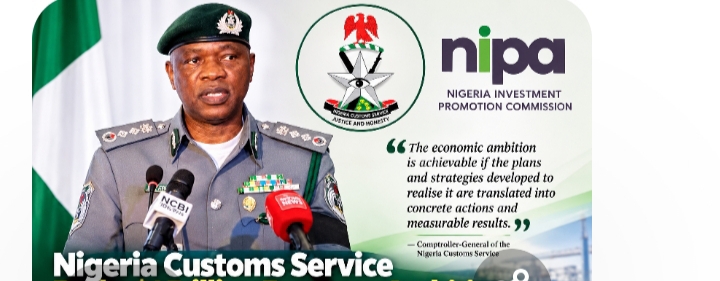
The Comptroller-General of the Nigeria Customs Service (NCS), Adewale Adeniyi, has pledged the Service’s full support for Nigeria’s ambition to build a $1 trillion economy, insisting that the target can only become reality when economic policies are translated into concrete actions and measurable results.
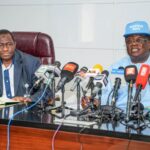
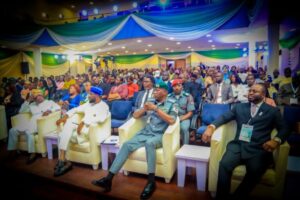
Adeniyi made the commitment on Tuesday, October 6, 2026, while delivering a keynote address at the New Nigeria Festival held at the Shehu Musa Yar’Adua Conference Hall in Abuja.
The Customs boss stressed that Nigeria’s economic transformation required more than policy formulation, strategic plans and public declarations, urging government institutions and other stakeholders to move decisively from ideas to implementation.
According to him, the success of the country’s $1 trillion economic ambition will ultimately be determined by the ability of institutions to execute policies effectively and deliver tangible benefits to businesses, investors and citizens.
“Execution is nothing if it is not concrete. We have to move from ideas to action and ensure that whatever we plan translates into results. That is how we can begin to see the kind of transformation we are talking about,” he said.
Adeniyi said the Nigeria Customs Service had already commenced practical measures to support the Federal Government’s economic objectives through its ongoing modernisation programme, with emphasis on trade facilitation, revenue generation, transparency and the creation of a more predictable business environment.
He identified the deployment of B’Odogwu, the Authorised Economic Operator (AEO) programme and the Advance Ruling mechanism among the key initiatives introduced by the Service to improve customs administration and facilitate legitimate trade.
He explained that the reforms were designed to simplify customs procedures, reduce uncertainty for businesses, improve transparency and make cross-border trade more efficient.
The Comptroller-General maintained that while policy development remained critical to economic growth, policies could only have meaningful impact when they were properly implemented and produced measurable outcomes.
He therefore called for a culture of accountability and results across government institutions, stressing that every agency must take ownership of its responsibilities in advancing the national economic agenda.
Adeniyi also emphasised that the responsibility for achieving a $1 trillion economy could not rest solely on government agencies.
He said businesses, public institutions and citizens must work collectively towards building a stronger and more productive economy, noting that sustainable economic transformation required shared responsibility, innovation and consistent execution.
Highlighting the strategic role of the Nigeria Customs Service, Adeniyi noted that the agency’s responsibilities in revenue collection, trade facilitation and border management placed it at the centre of Nigeria’s economic development efforts.
He said an efficient customs administration could strengthen legitimate businesses, facilitate the movement of goods across borders, enhance government revenue and create an enabling environment for increased economic activity.
The Customs modernisation reforms, he added, were aimed at repositioning the Service to respond effectively to the demands of a rapidly changing global trading environment while contributing more significantly to Nigeria’s broader development objectives.
Adeniyi consequently urged Nigerians and institutions to abandon a culture of rhetoric without results, calling instead for sustained commitment to implementation, accountability and measurable outcomes.
He reiterated that Nigeria’s $1 trillion economy ambition is achievable, but stressed that its realisation would depend on effective execution, institutional collaboration and the determination of all stakeholders to convert national plans into practical economic gains.
His pledge reinforces the Nigeria Customs Service’s stated commitment to supporting Nigeria’s economic growth through modernised customs operations, improved trade facilitation, stronger revenue administration and a more business-friendly trading environment.