

Chioma Vivian James
The Nigeria Union of Journalists (NUJ), Federal Capital Territory (FCT) Council, has reaffirmed its commitment to promoting gender mainstreaming within the Nigeria Police Force, describing inclusive policing as a critical public interest issue that requires sustained media engagement and visibility.
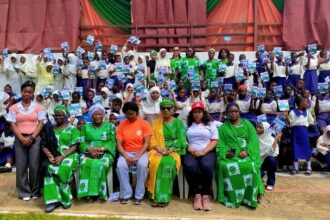
The position was restated during the Nigeria Policewomen Conference (NPWC) 2026, held in Abuja under the theme, “Strengthening Women’s Leadership in Policing for Inclusive Security and Sustainable Reform.” The conference brought together senior police officers, government officials, development partners, and civil society stakeholders to advance conversations on institutionalising women’s leadership within the Force.
 Delivering a goodwill message on behalf of the Chairman of the NUJ FCT Council, Comrade Grace Ike, the Council’s Auditor, Comrade Rosemary Ukoko-Tega, noted that the media had historically been excluded from many discussions surrounding gender mainstreaming initiatives within the police. She emphasized that the Council is determined to change that narrative by fostering stronger collaboration between journalists and law enforcement institutions.
According to her, gender-responsive policing and a free, independent press are mutually reinforcing pillars of accountability, transparency, and public trust. She stressed that the active involvement of the media is essential to ensuring that reform efforts receive the public attention and scrutiny needed for meaningful implementation.
“With more than 2,000 journalists operating within the Federal Capital Territory, the media possesses enormous capacity to shape public discourse and influence institutional responsiveness,” she said. “When policies are neglected or implementation gaps emerge, timely and factual reporting can help stimulate action and accountability.”
Rather than maintaining an adversarial relationship between the media and the police, Ukoko-Tega advocated for a more structured engagement framework. She proposed the designation of dedicated police liaison officers to facilitate communication with the NUJ FCT Council and encouraged policewomen to proactively share their achievements, initiatives, and experiences for wider media coverage.
“These positions align with the NUJ FCT Council’s longstanding advocacy for transparency, institutional accountability, and media inclusion in matters of public reform,” she added.
The Council’s intervention reinforced one of the conference’s central messages—the need for greater visibility of women’s contributions to policing. Participants noted that despite significant achievements by female officers, including increased representation in leadership positions across commands and formations, many success stories remain underreported due to limited institutional engagement with the media.
In a keynote address delivered on behalf of the Inspector-General of Police, IGP Olatunji Rilwan Disu, the Director of Force Medical Services, AIG Nkechi Eze, highlighted the significance of the reactivated Nigeria Policewomen Conference as evidence of the Force’s commitment to building a more inclusive and modern policing system.
The Inspector-General acknowledged the remarkable contributions of women officers in diverse areas of policing, including criminal investigations, forensic science, tactical operations, peacekeeping missions, and international assignments. However, he noted that persistent challenges such as mentorship gaps, limited leadership opportunities, and inadequate welfare support continue to hinder the advancement of many female officers.
He urged participants to move beyond dialogue and develop practical recommendations that would strengthen leadership development, expand mentorship programmes, and promote inclusive policies across the Force. He also called on senior female officers to intentionally mentor younger colleagues as part of a deliberate strategy for sustaining leadership succession and institutional growth.
The conference also recognized the contributions of development partners whose support has been instrumental to police reform and women’s leadership initiatives. The United Nations Development Programme (UNDP), the Government of Germany, GS-Foundation, and UN Women were commended for their continued partnership with the Nigeria Police Force. Particular recognition was given to the German Embassy and GS-Foundation for their sustained donor support and project engagement, which have helped ensure the continuity of the programme.
Reaffirming its commitment to the reform process, the NUJ FCT Council expressed readiness to work closely with the Nigeria Police Force to institutionalise regular media access to information on gender-focused reforms and leadership initiatives. The Council maintained that stronger collaboration between police leadership and the media would not only enhance transparency but also increase public appreciation of the invaluable contributions of policewomen to national security and community safety.
The Nigeria Policewomen Conference 2026 was convened by the Nigeria Police Force in partnership with the United Nations Development Programme (UNDP), the Federal Ministry of Police Affairs, the Federal Ministry of Women Affairs, the Embassy of the Federal Republic of Germany, GS-Foundation, and UN Women.
Hosted at the United Nations House in Abuja, the event provided a strategic platform for stakeholders to advance the agenda of inclusive policing and sustainable institutional reform through stronger women’s leadership.