
Nigeria stands at a familiar crossroads—one where the right decision is clear, yet hesitation continues to slow progress. The proposed Special Seats for Women Bill represents one of those defining moments.
For decades, women have been told to participate more, work harder, and wait their turn. Yet the structure of Nigeria’s political system has remained largely unchanged—expensive, exclusionary, and deeply resistant to new entrants.
Today, women make up nearly half of Nigeria’s population, yet hold only about 3.7 percent of seats in the Senate and roughly 4.4 percent in the House of Representatives following the 2023 elections. At the state level, representation remains similarly low, with several State Houses of Assembly recording fewer than 10 percent women—and in some cases, none at all.
Globally, women now hold about 27.5 percent of parliamentary seats, according to the Inter-Parliamentary Union (IPU). Across Africa, countries such as Rwanda, South Africa, and Senegal demonstrate that deliberate policy choices can significantly shift representation within a relatively short period. Nigeria, by contrast, remains among the lowest-ranked countries in the world.
These gaps are not abstract. They are visible in lived experience.
Kadaria Ahmed’s documentary Double Minority, which followed women who contested Nigeria’s 2023 elections, captured this reality with clarity. It showed how political exclusion does not begin on election day—it begins much earlier, at the point of nomination, within party selection processes, and through informal gatekeeping systems where financial capacity and political networks often outweigh competence. The women featured were not lacking in ability; they were constrained by structures that were never designed to accommodate them equally.
In the last election cycle, multiple reports and firsthand accounts from female aspirants across major political parties highlighted consistent structural barriers within the political process. Many described nomination fees running into tens of millions of naira—costs that placed candidacy beyond the reach of most individuals without strong financial or political backing. Beyond financial constraints, several accounts also pointed to experiences of intimidation, exclusionary party practices, and uneven access to internal party structures during primaries, which in some cases prevented women from progressing to the ballot stage. These patterns have been echoed in domestic election observation reports by civil society organisations such as the Situation Room coalition, as well as in broader governance analyses of Nigeria’s 2023 elections.
This is not just a women’s issue; it is a governance failure.
Too often, many capable women are shut out before the real contest even begins. Sometimes exclusion happens long before election day—at the point of nomination forms, within party hierarchies, and through local political negotiations where money and influence often matter more than merit.
This is why the proposed Special Seats for Women Bill matters.
It offers a practical and time-bound mechanism to create additional seats exclusively for women in the National Assembly and State Houses of Assembly. It is not about replacing competition; it is about correcting structural imbalance and expanding access where it currently does not exist.
Predictably, concerns are often raised around cost and merit.
On cost, the more important question is what Nigeria is losing by excluding women from decision-making. The McKinsey Global Institute estimates that advancing women’s equality could add up to $28 trillion to global GDP in a full-potential scenario. Closer to home, UN Women consistently shows that increased female representation is linked to stronger investment in health, education, and social protection—areas central to national development.
On merit, the argument does not hold. Nigerian women have demonstrated competence across law, business, academia, civil society, and public service. The issue has never been a lack of qualified women, but rather limited access to a political system shaped by high nomination fees, weak party support, and electoral violence.
The Special Seats Bill does not lower standards. It corrects structural imbalance.
Importantly, this proposal is not permanent. It has often been framed as a temporary 16-year transitional mechanism designed to accelerate representation while broader reforms take root. More than 130 countries around the world have adopted some form of quota system for women’s political participation, with measurable improvements in representation outcomes.
But legislation alone will not be enough.
Political parties must also reform internal processes, reduce barriers to entry, and deliberately support female candidates. Without this commitment, even special seats will only partially address the challenge.
As President of WAVE Foundation Africa, I work with women and girls whose realities are shaped by decisions made far from their communities. Too often, those most affected by governance are absent from the rooms where decisions are made. That imbalance must change.
Nigeria cannot continue to sideline half of its population and expect different outcomes.
The time for symbolic support has passed. What is needed now is deliberate action.
The Special Seats for Women Bill is not a favour to women. It is a necessary step toward better governance, stronger institutions, and a fairer democracy.
It is long overdue.
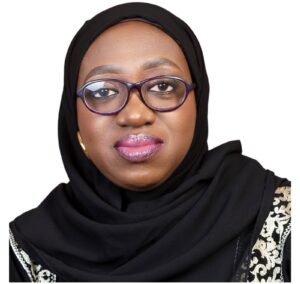
Arc. Lola Ibrahim, FNIAArchitect | Development Advocate | President, WAVE Foundation Africa
Writes from Abuja.