
‘A Seat at the Table’ Abuja Edition Unites Women Around Enterprise, Influence and Collective Participation
By Chioma Vivian James
Women must move beyond merely being present in spaces of influence to becoming active contributors who help shape the decisions that determine the future of their families, businesses, communities and the nation, the Minister of Women Affairs and Social Development, Hon. Imaan Sulaiman-Ibrahim, has declared.
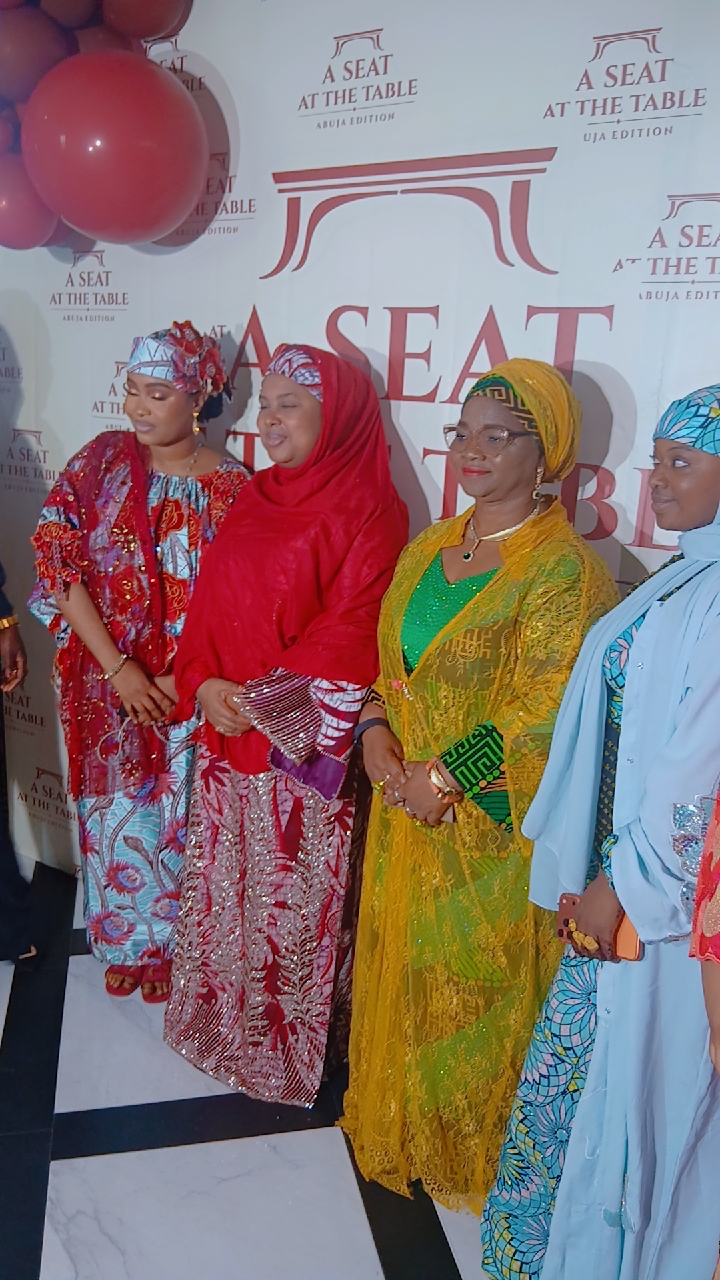
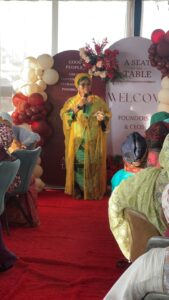
The Minister made the call while delivering the keynote address at the Abuja edition of “A Seat at the Table,” held on September 20, 2026, where she challenged women entrepreneurs, professionals, executives, founders and community leaders to recognise their economic and social power and deploy it intentionally.
Speaking to an audience drawn from diverse professional and entrepreneurial backgrounds, Sulaiman-Ibrahim described women as “guardians of heritage, architects of resilience and builders of tomorrow,” stressing that women have consistently created, sustained and transformed communities through their contributions in homes, markets, businesses, institutions and professional spaces.
According to her, the central question is no longer whether women possess power, but how deliberately they will use that power to influence the tables where decisions are made.
She explained that the concept of “A Seat at the Table” goes beyond physical presence, describing a seat as a symbol of access, visibility, participation and the opportunity to speak, negotiate and influence outcomes.
The Minister urged women not to remain at the margins of decision-making, noting that their contributions to businesses, families, employment generation and community development have already earned them a legitimate place in influential spaces.
“Do not sit in the corner,” she told the gathering, emphasising that women have built businesses, created jobs, raised families, sustained communities and contributed significantly to economic activity.
She also drew attention to the need for women, particularly women from Northern Nigeria, to take ownership of their narratives.
According to her, women’s grace, cultural respect and humility should not be interpreted as silence, lack of ambition or absence of capacity.
She pointed to the growing number of women who are founders, executives, scholars, creators, professionals, community leaders, employers, innovators and investors, arguing that their stories should increasingly be told by the women themselves.
Reflecting on her own public-service journey, Sulaiman-Ibrahim said her experiences across national institutions, including the National Agency for the Prohibition of Trafficking in Persons (NAPTIP) and the National Commission for Refugees, Migrants and Internally Displaced Persons, as well as her tenure as Nigeria’s first female Minister of State for Police Affairs, reinforced her conviction about the importance of women’s representation.
She recalled that in several decision-making rooms, she was either the only woman or one of very few women.
Those experiences, she said, taught her a lesson that remains central to her advocacy: when women are absent from the room, decisions about women are still being made.
The Minister further addressed the challenge of balancing professional ambition with family, cultural and social responsibilities, encouraging women not to allow the weight of those responsibilities to undermine their aspirations.
She maintained that women can simultaneously be women of substance, enterprise, family and influence.
Women as Economic Powerhouses
Sulaiman-Ibrahim urged women entrepreneurs to see their enterprises as more than personal businesses, describing them as important components of the national economic architecture.
She noted that employees depend on businesses for their livelihoods, customers are connected to communities, and supply chains create economic relationships that extend far beyond individual enterprises.
Whether in agriculture, fashion, technology, professional services, manufacturing, retail or other sectors, she said, women’s enterprises contribute to national productivity.
 It was against this backdrop that she introduced the significance of the “Power of 10 Million”, describing the figure as representing millions of women whose combined economic, social and civic participation could become a significant force for national development.
“Ten million women is not simply a number,” she said, explaining that it represents ten million voices, economic actors, mothers, professionals, entrepreneurs, community leaders and citizens.
However, she cautioned that numbers alone do not create influence, stressing that collective strength becomes meaningful when people are organised, connected and intentional.
‘One Voice, One Movement, One Choice’
The Minister explained the significance of the movement’s message, “One Voice. One Movement. One Choice,” as a framework for collective participation.
“One Voice,” she said, represents the ability of individual experiences to become a collective conversation.
“One Movement” speaks to the power of businesses, associations, cooperatives, networks and communities to become interconnected platforms for participation.
She further acknowledged that “One Choice,” within the political framing of the movement, represents collective support being expressed for President Bola Ahmed Tinubu as the All Progressives Congress presidential candidate for the 2027 election.
As the country approaches the 2027 elections, Sulaiman-Ibrahim urged women to understand that democratic participation extends beyond voting.
She encouraged women to become informed about issues affecting their businesses, families and communities, while also organising, engaging and ensuring that women’s voices remain part of the democratic process.
From Scattered Strength to Organised Strength
The Minister, however, stressed that political participation should not undermine women’s businesses or entrepreneurial pursuits.
Rather, she said, business networks, professional associations, cooperatives, market groups and community structures could provide platforms for women to access information, opportunities, finance, policy conversations and broader networks.
She called for the transformation of what she described as “scattered strength” into organised strength, encouraging women to build stronger networks that can translate individual achievements into collective influence.
 She also highlighted the role of the Federal Ministry of Women Affairs and Social Development in connecting women with government.
Sulaiman-Ibrahim urged women to approach the Ministry with their challenges, innovations, proposals and sector-specific concerns, assuring them that government must provide platforms through which women’s ideas and aspirations can connect with policy and development initiatives.
‘Build Another Table’
For the Minister, however, the ultimate message of “A Seat at the Table” extends beyond the gathering itself.
She noted that there are multiple tables where decisions affecting women’s lives and livelihoods are made—including government, business, finance, technology, agriculture and policymaking.
“There is a table where women negotiate for opportunity, access and inclusion,” she said, urging women not to be discouraged when they encounter spaces where they are not represented.
Sometimes, she added, women must have the courage to build another table and invite others to it.
Sulaiman-Ibrahim concluded with a powerful call for a new phase of women’s participation—one that moves women from presence to purpose, consultation to contribution, and beneficiaries to partners.
“This is Women O’Clock,” she declared, urging women to harness the Power of 10 Million through their businesses, voices, networks, communities and collective participation.
Her final message captured the spirit of the gathering:
“Do not sit in the corner. Come to the table. And when you get there, make room for another woman.”