


FG Mobilises Fathers, Traditional Rulers, Religious Leaders to Protect Girls; Unveils Empowerment Packages and Strategic Framework to Secure Their Future
Chioma Vivian James/ABUJA, October 11, 2026.
In a renewed push to end child marriage and safeguard the rights of the Nigerian girl child, the Federal Government will unveil a National Strategy and Costed Action Plan for Ending Child Marriage in Kano State on Tuesday, October 13, as part of activities marking the 2026 International Day of the Girl Child.
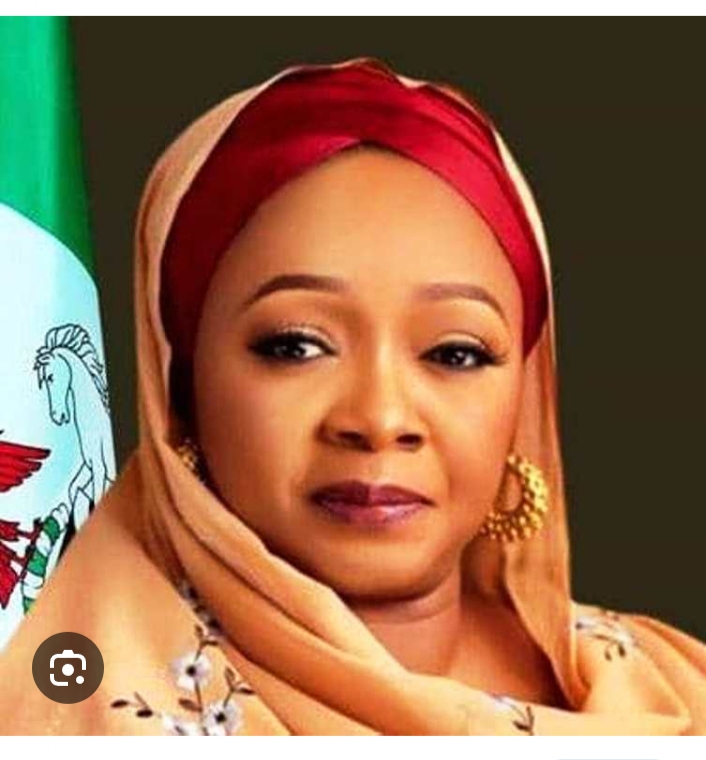
The Honourable Minister of Women Affairs and Social Development, Imaan Sulaiman-Ibrahim, will lead a high-level Federal Government delegation to the state for the national commemoration, which will feature the launch of the strategic framework, empowerment packages for selected vulnerable girls and families, and an intergenerational dialogue aimed at mobilising men and boys against harmful practices affecting girls.
The initiative represents a significant step towards translating national commitments into practical interventions, with emphasis on keeping girls in school, strengthening family support systems and engaging traditional and religious institutions in efforts to end child marriage.
The National Strategy and Costed Action Plan is expected to provide a practical and budgetary framework to guide interventions by federal and state governments, development partners and other stakeholders. Its implementation is intended to strengthen coordination, improve resource allocation and support sustained action against child marriage.
Beyond the policy launch, the Federal Government will distribute targeted educational and empowerment packages to selected vulnerable girls and families. The intervention is also designed to recognise parents who support their daughters’ education and encourage sustained school attendance.
MOBILISING MEN AS CHAMPIONS OF CHANGE
Observed globally on October 11, the International Day of the Girl Child provides an opportunity to renew commitments to protecting girls’ rights, expanding access to quality education and eliminating harmful practices that undermine their development.
The 2026 observance, under the theme “End Child Marriage and Invest in Girls’ Rights,” places particular emphasis on the role of men and boys in challenging harmful social norms and creating safer, more supportive environments for girls.
By bringing fathers, traditional rulers, religious leaders, male allies and adolescent girls together, the Kano event seeks to strengthen community ownership of the campaign and promote positive masculinity as a tool for social transformation.
Across communities, supportive fatherhood is increasingly being recognised as a critical factor in securing girls’ futures. Fathers who prioritise their daughters’ education, encourage their ambitions and protect them from early marriage can help break cycles of inequality and expand opportunities for the next generation.
Improved school retention, female literacy and participation in higher education remain important goals in this broader effort to create an environment where girls can pursue their aspirations without discrimination or the threat of premature marriage.
TINUBU ADMINISTRATION REAFFIRMS COMMITMENT
The initiative aligns with President Bola Ahmed Tinubu’s Renewed Hope Agenda, under which the Federal Government has reiterated its commitment to social inclusion, family welfare and the protection of vulnerable populations.
The declaration of 2026 as the Year of Families and Social Development further underscores the importance of stable, supportive households in advancing children’s rights and improving social outcomes.
The Federal Ministry of Women Affairs and Social Development maintains that fathers and male guardians have a critical role to play as the first line of support in protecting their daughters’ dignity, education and overall wellbeing.
Speaking ahead of the Kano commemoration, Sulaiman-Ibrahim stressed that ending child marriage requires a united front involving men and boys alongside women and girls.
“Ending child marriage requires a united front where men and boys stand shoulder-to-shoulder with women and girls,” the minister said.
She added that fathers, traditional rulers, religious leaders and young boys must actively support the protection and advancement of girls.
“No girl should ever be denied her childhood, and together with our male allies across Nigeria, we are building a nation where every girl is safe, educated, and empowered,” she stated.
POLICY REFORMS TO STRENGTHEN CHILD PROTECTION
As the national institutional mechanism for advancing the interests of women, children, families and other vulnerable groups, the ministry continues to pursue policy reforms and targeted interventions aimed at strengthening protection systems.
Under the 9-Pillared Renewed Hope Social Impact Intervention 774 (RH-SIIP 774), the ministry is working across the country’s 774 local government areas to expand the reach of social development programmes and promote inclusion.
The ministry has also developed, reviewed and validated more than 38 policy instruments, standard operating procedures and specialised frameworks designed to strengthen support systems for women, children and vulnerable populations.
Among the key initiatives are the ongoing review of the Child Rights Act 2003 in collaboration with the Federal Ministry of Justice and the comprehensive review of the National Child Policy 2008 to address emerging challenges affecting adolescent girls, digital safety and social protection.
Other priorities include the adoption of Nigeria’s first National Strategy on Menstrual Health and Hygiene, the ongoing review of the Second National Gender Policy and the deliberate inclusion of women and girls with disabilities in protection, education, digital skills and economic empowerment programmes.
These reforms are intended to create a more responsive institutional framework for addressing the social, economic and cultural barriers that expose girls to abuse, exclusion and early marriage.
EDUCATION, SAFETY AND ECONOMIC EMPOWERMENT
Complementing these policy measures are the ministry’s Girl Child Development Desk, the See Something, Say Something, We Do Something child protection campaign, the Future Now Initiative for STEM education and the Care Economy agenda.
Together, these interventions seek to strengthen child protection, expand opportunities for girls in science, technology, engineering and mathematics, and address excessive unpaid domestic responsibilities that can interfere with their education and personal development.
The ministry is also advancing the Nigeria for Women Program Scale-Up (NFWP-SU), supported by a $500 million World Bank expansion, to strengthen women’s economic empowerment and household financial security.
By supporting economic stability within families, the programme is intended to help ease financial pressures that can contribute to harmful coping strategies, including decisions that interrupt girls’ education or expose them to early marriage.
The broader objective is to ensure that girls’ futures are not determined by household poverty, restrictive social expectations or unequal access to opportunities.
INTERGENERATIONAL DIALOGUE TO DRIVE SOCIAL CHANGE
A major highlight of the Kano commemoration will be an intergenerational dialogue on positive masculinity and changing social norms.
The engagement will bring together traditional rulers, religious leaders, fathers and adolescent girls to discuss practical approaches to protecting girls and ending child marriage.
It will also showcase male role models who champion girls’ education and use their influence to challenge harmful practices within their communities.
The dialogue recognises that laws and policies alone cannot eliminate child marriage without sustained community participation, responsible leadership and a shift in attitudes towards girls’ rights.
By encouraging men and boys to become active partners in the campaign, the Federal Government hopes to strengthen community-based protection and promote a culture in which girls are supported to make informed choices about their education and future.
FROM POLICY COMMITMENTS TO CONCRETE ACTION
As preparations for the national commemoration gather momentum, the Federal Government has called on state governments, traditional institutions, faith-based organisations, community leaders, fathers and youth groups across the 36 states and the Federal Capital Territory to support the campaign against child marriage.
The call places responsibility not only on government institutions but also on families and communities whose decisions and practices directly influence girls’ opportunities and wellbeing.
Ultimately, the success of the national strategy will depend on effective implementation, adequate funding, sustained public engagement and measurable improvements in the lives of vulnerable girls.
The Kano commemoration therefore presents an opportunity to move beyond declarations towards coordinated action that protects childhood, keeps girls in school and expands their opportunities to contribute meaningfully to national development.
For Nigeria, ending child marriage is not merely a child-protection objective; it is an investment in education, gender equality, family welfare and the country’s long-term social and economic progress.