
WHO, FAO, UNEP and WOAH call for stronger surveillance, sustainable funding, responsible antibiotic use and urgent One Health interventions.
By Chioma Vivian James, Abuja-Nigeria
Global health experts have called for stronger international collaboration and coordinated action across human, animal and environmental health sectors to combat the growing threat of antimicrobial resistance (AMR), warning that inadequate funding, weak surveillance and poor coordination continue to undermine efforts to contain the crisis.
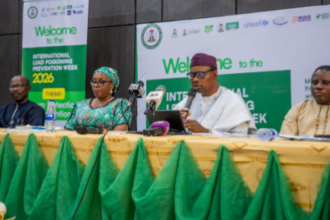
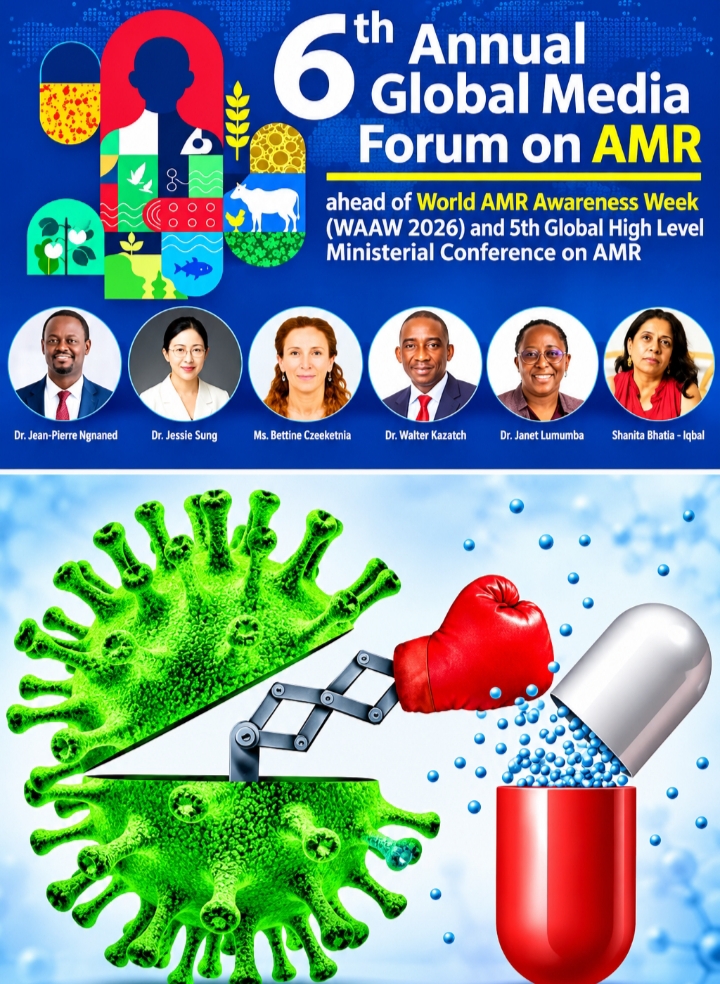
The call was made at the sixth Global Media Forum on Antimicrobial Resistance, held ahead of the 2026 World AMR Awareness Week (WAAW), scheduled for November 18–24.
Antimicrobial resistance was associated with more than 4.7 million deaths globally in 2021, underscoring the urgent need for sustained interventions, stronger health systems and a comprehensive One Health approach to tackling the challenge.
Speaking at the forum, Jean-Pierre Nyemazi, Director of the Antimicrobial Resistance Department at the World Health Organization (WHO) and Director of the Quadripartite Joint Secretariat on AMR, identified financing gaps, inadequate surveillance systems and limited intersectoral coordination as major obstacles to addressing the growing public health threat.
He emphasised that behind the alarming statistics were real people, families, farmers and communities whose lives and livelihoods were affected by antimicrobial resistance, stressing that global commitments must translate into measurable action at the grassroots.
Nyemazi noted that the updated Global Action Plan on AMR for 2026–2036 was designed to strengthen prevention, surveillance, responsible antimicrobial use and sustainable financing.
He also highlighted the commitment by world leaders to reduce deaths associated with bacterial antimicrobial resistance by 10 per cent by 2030, describing the target as an important milestone requiring collective commitment and accountability.
On the agricultural front, Junxia Song, Deputy Chief Veterinarian and Chief of the One Health and Disease Control Branch at the Food and Agriculture Organization of the United Nations (FAO), warned that antibiotic consumption in livestock could increase by nearly 30 per cent by 2040 if urgent interventions were not implemented.
She explained that improved animal health, better livestock management and preventive practices could reduce antibiotic use by as much as 57 per cent, reinforcing the importance of addressing AMR beyond the human health sector.
Similarly, Aitziber Echeverria, AMR Coordinator, Chemicals and Health Branch at the United Nations Environment Programme (UNEP), called for stronger environmental protection measures, particularly against pollution from antimicrobial residues discharged into wastewater and other environmental systems.
She stressed that environmental contamination remained an important pathway through which antimicrobial resistance could develop and spread, making environmental interventions indispensable to the global response.
Kefas Samson, Senior Technical Officer and Lead of Multisectoral Coordination at the WHO AMR Department, also drew attention to persistent challenges involving inadequate diagnostic capacity, weak surveillance systems and limited access to quality-assured antimicrobial medicines.
He underscored the need to strengthen healthcare infrastructure and ensure that appropriate medicines and diagnostic services were accessible to those who needed them.
Jane Lwoyero, Programme Officer at the World Organisation for Animal Health (WOAH), highlighted vaccination, improved farm hygiene and stronger biosecurity measures as critical tools for reducing infections and limiting the unnecessary use of antibiotics in animals.
In her remarks, Shobha Shukla, Chairperson of the Global AMR Media Alliance (GAMA) and host of the forum, advocated a people-centred, rights-based and gender-transformative approach to tackling antimicrobial resistance.
She emphasised the importance of inclusive communication, public awareness and responsible journalism in ensuring that AMR receives sustained attention from policymakers, communities and other critical stakeholders.
Beyond the discussions on policy, financing and prevention, the forum also celebrated the contributions of the media to the global AMR response.
A total of 56 journalists and media professionals were recognised as Global AMR Media Awardees 2026 for their outstanding contributions to reporting, public education and awareness creation on antimicrobial resistance.
The recognition further underscored the growing importance of journalism in translating complex health issues into accessible information, promoting accountability and mobilising public support for interventions against AMR.
As the world prepares to mark the 2026 World AMR Awareness Week, experts insist that tackling antimicrobial resistance requires more than declarations and policy commitments. It demands sustained investment, effective surveillance, responsible antimicrobial use and practical collaboration across all sectors.
Their message is clear: the fight against antimicrobial resistance must be a collective global responsibility, with coordinated action today essential to safeguarding the effectiveness of life-saving medicines for future generations.