
Nigeria, others urged to strengthen diagnostics, primary healthcare, pharmacy regulation as survivor recounts 13-year battle with resistant infection
By Chioma Vivian James
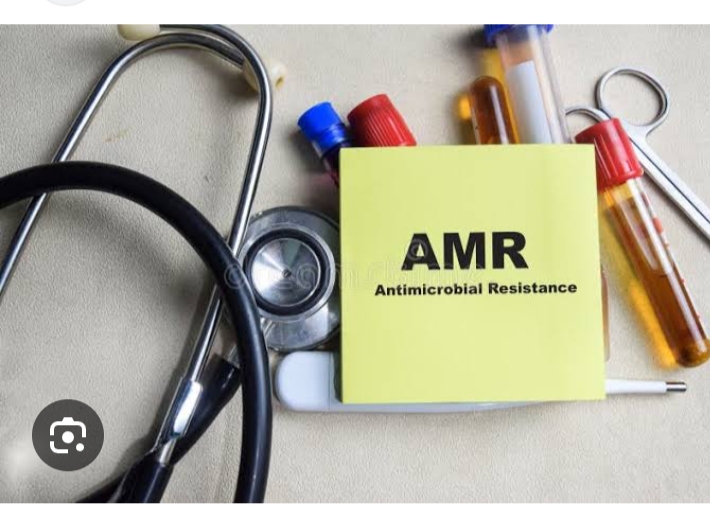
The World Health Organisation (WHO) has warned that antimicrobial resistance (AMR) is claiming about one million lives annually, with drug-resistant bacterial infections alone killing an estimated two people every minute, as it called for stronger action by countries including Nigeria to prevent the growing threat.
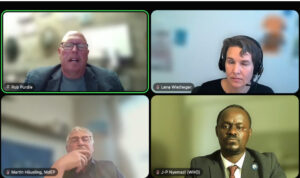
Acting Director, AMR Department, WHO headquarters, Dr Jean-Pierre Nyemazi, gave the warning at a press conference organised by WHO and Member of the European Parliament, Hon. Martin Häusling, to mark the exhibition, “AMR: The Human Stories Behind a Silent Pandemic,” at the European Parliament in Brussels.
The exhibition, which runs from September 28 to October 2, 2026, features personal accounts of people affected by antimicrobial resistance.
Nyemazi said AMR could no longer be treated as an abstract or distant health challenge.
“One million people die every year due to drug-resistant bacteria alone — that is, two people every minute die of bacterial AMR,” he said.
He said the crisis affects not only human health but also animals, agriculture, food systems, economies and the environment, stressing that resistant pathogens can move between humans and animals and across national borders.
Nigeria faces critical challenges
Linking the global crisis to countries such as Nigeria, Nyemazi said access to timely diagnosis and appropriate treatment remains a major concern in many parts of the world.
He said governments must strengthen primary healthcare systems so that patients can obtain proper diagnosis and prescriptions instead of resorting to self-medication or purchasing antibiotics directly from pharmacies.
According to him, the situation becomes more complicated where people cannot easily access healthcare services, because families may seek treatment directly from pharmacies without knowing the exact cause of an illness.
He called for stronger enforcement of regulations prohibiting the dispensing of reserve antibiotics without prescriptions.
“We therefore also need to educate the population so that people stop seeking medicines this way. Of course, this only works if people can access proper care and diagnostics in the first place,” he said.
Nyemazi also advocated the use of digital technology to track medicines dispensed by pharmacies, making it possible to determine whether antibiotics were provided for legitimate clinical purposes.
Private sector must join Nigeria’s AMR fight
The WHO official said the response to AMR in Nigeria must involve government, civil society, communities and the private sector, particularly because private providers operate a significant proportion of health facilities.
“Everyone has a role,” he said, adding that governments must ensure that essential healthcare services are available and accessible.
He also identified poor coordination as one of the major obstacles to AMR control because the problem cuts across human health, animal health, agriculture, food production and the environment.
“Access to veterinary services is still limited in Nigeria and many other places,” Nyemazi said, stressing that the same health-system challenges affecting humans can also affect animal health.
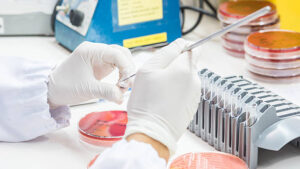
He urged Nigeria and other countries to strengthen coordination among health authorities, veterinary services, agriculture, pharmacies, laboratories, environmental agencies, private healthcare providers and communities under the One Health approach.
‘Stop mass treatment of animals’
Häusling warned against indiscriminate antibiotic use in humans and animals, particularly the treatment of entire groups of animals when only one is sick.
“When one chicken becomes sick, the entire group is given antibiotics even if the others show no symptoms. We have to move away from this mass treatment,” he said.
He also raised concerns about environmental contamination from intensive animal production, warning that wastewater from slaughterhouses could contain drug-resistant pathogens.
Häusling called for an end to unnecessary prophylactic treatment and excessive use of last-resort antibiotics in food-producing animals.
Survivor recounts 13-year battle
An AMR survivor and member of the WHO Task Force of AMR Survivors, Rob Purdie, gave a personal account of how delayed diagnosis transformed an apparently ordinary headache into a life-changing fungal infection.
Purdie said his ordeal began in January 2012 when he developed a severe headache. He was initially diagnosed with a sinus infection and prescribed antibiotics.
After the treatment failed, another doctor made the same diagnosis and prescribed a different antibiotic.
It was only after he consulted an ear, nose and throat specialist that diagnostic investigations began.
His condition later deteriorated, with severe headaches, nausea and vision problems. After he was taken to a hospital emergency room, a lumbar puncture was performed and he was eventually diagnosed with a fungal infection that had progressed to meningitis.
Purdie said the infection subsequently proved resistant to several antifungal drugs, forcing doctors to use salvage therapy involving a combination of medicines.
 One of the drugs caused severe photosensitivity, which he said contributed to squamous cell carcinoma in 2015. He has since had five additional cancers removed.
The illness also devastated his livelihood.
“My ability to earn a living was completely eliminated for about five years in a single-income household where I provided for my wife and two children,” he said.
More than a decade after his diagnosis, Purdie remains on daily antifungal medication because existing medicines can control but cannot cure his infection.
“You lose a lot,” he said.
Nigeria needs prevention, diagnostics
Nyemazi said prevention remains the most effective response to AMR, stressing the importance of vaccination, infection prevention and control, water, sanitation and hygiene (WASH), improved animal husbandry, responsible antimicrobial use, surveillance and access to quality medicines and diagnostics.
“The tools exist and the evidence is there, but the cost of inaction is rising. The longer we delay action, the higher the cost becomes,” he said.
For Nigeria, he said, stronger primary healthcare and diagnostic capacity would be critical to reducing inappropriate antimicrobial use.
He also called for greater public education to discourage self-medication and inappropriate demand for antibiotics.
New global plan targets 10% reduction
Nyemazi said the updated Global Action Plan on AMR, approved by WHO Member States in May 2026, places greater emphasis on prevention, governance, measurable targets and behavioural change.
The plan was developed by WHO, the Food and Agriculture Organisation (FAO), United Nations Environment Programme (UNEP) and World Organisation for Animal Health (WOAH).
He said the global target of reducing deaths associated with bacterial AMR by 10 per cent by 2030 was achievable through infection prevention and control, vaccination and improved access to quality antimicrobials.
Purdie said achieving the target would require sustained public education and stronger media engagement.
“A 10% reduction is achievable, but it takes all of us — including educating journalists and the public. Journalists have an enormous influence on the public,” he said.
Both experts called for increased investment in new antibiotics, antifungals, phage therapy, diagnostics and other technologies.
Nyemazi, however, warned that developing new medicines would not be enough if existing drugs were continually misused.
“We have to do both: develop new tools and protect the ones we already have, with clear plans for their use, paired with diagnostics and proper training for prescribers,” he said.
Purdie noted that developing new antifungal medicines could take decades, making responsible use of existing medicines an urgent priority.
“We can make a big difference today simply by valuing these medicines for what they are: the foundation of modern medicine,” he said.
For Nigeria, the WHO message places renewed emphasis on early diagnosis, stronger primary healthcare, responsible prescribing, tighter pharmacy regulation, infection prevention, vaccination, public education and coordinated action across human, animal and environmental health sectors.
The warning is that without such action, antimicrobial resistance could increasingly turn treatable infections into prolonged illnesses, impose heavier costs on families and health systems, and threaten some of the medicines on which modern medicine depends.