
Experts highlight age discrimination, gender inequality, HIV-related stigma and the need for inclusive healthcare and stronger human rights accountability.
Chioma Vivian James /Abuja -Nigeria
International human rights experts, health advocates and community representatives have called for stronger protection of older persons’ rights, emphasising the need to address discrimination, improve healthcare access and ensure that marginalised groups are not excluded from public policies.
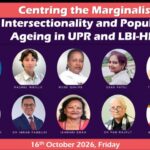
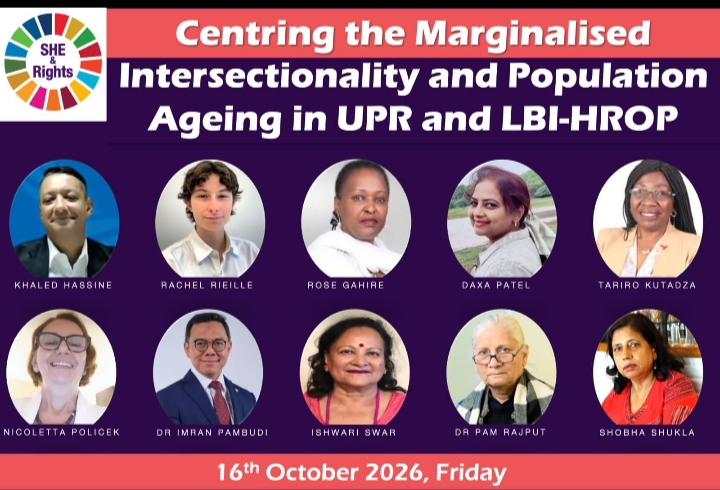
The call was highlighted at the 51st SHE & Rights session held on October 16, 2026, under the theme “Centring the Marginalised: Intersectionality and Population Ageing in UPR and LBI-HROP.”
Organised by the Global Center for Health Diplomacy and Inclusion (CeHDI) and Citizen News Service (CNS), alongside partner organisations, the session examined the intersection of ageing, gender equality, public health and human rights.
The discussion emphasised that older persons must be recognised as rights holders entitled to dignity, equality, healthcare and meaningful participation in decisions affecting their lives.
Addressing Inequality in Older Age
The panellists represented different perspectives on ageing, human rights, healthcare, data and community advocacy.
Khaled Hassine, Secretary of the Intergovernmental Working Group on the Human Rights of Older Persons at the Office of the United Nations High Commissioner for Human Rights, represented the international human rights policy perspective.
Rachel Rieille, Data Manager at CeHDI, brought a data-focused perspective, while Rose Gahire, Co-Chair of the Global Alliance for the Rights of Older People (GAROP), represented global advocacy for older persons’ rights.
Nicoletta Policek, Co-Founder and Director of the PRISMA European Community Driven Observatory on Ageing and HIV, was also among the panellists, highlighting the importance of connecting ageing with HIV-related concerns.
The participation of Tariro Kutadza, Advocacy Lead at the Zimbabwe National Network of People Living with HIV (ZNNP+) and Founder Coordinator of TB People in Zimbabwe, alongside Daxa Patel, Co-Founder and former President of the National Coalition of People Living with HIV in India (NCPI+), brought community advocacy perspectives to the discussion.
Ishwari Swar, Founder-Chairperson of the Senior Citizens Welfare Association Nepal, represented the senior citizens’ welfare sector, while Dr Imran Pambudi, Director of Vulnerable Groups Health Services at Indonesia’s Ministry of Health, brought a government health-services perspective.
Dr Pam Rajput, a person with lived experience, Emeritus Professor at Panjab University and noted feminist leader, added a gender and lived-experience perspective to the conversation.
Together, their areas of work reflected the importance of addressing the overlapping challenges faced by older women, persons with disabilities, people living with HIV and other marginalised populations.
Strengthening Human Rights Protection
A major issue surrounding the session was the limited attention given to older persons within the United Nations Universal Periodic Review (UPR), a mechanism through which countries’ human rights records are examined.
According to the session’s published background information, only 681 of more than 124,539 UPR recommendations issued since 2008 specifically addressed older persons, representing approximately 0.5 per cent.
The figures highlight the need for greater recognition of older people’s rights in international human rights monitoring and national policy development.
The discussion also focused on efforts towards a legally binding international instrument on the human rights of older persons. Such an instrument could strengthen protections against age discrimination and promote access to healthcare, social protection and participation in public life.
The session’s background information identified October 26–30, 2026, as the scheduled dates for the second session of the Intergovernmental Working Group on the Human Rights of Older Persons.
Linking Ageing, HIV and Gender Equality
The discussion underscored the importance of addressing the needs of people ageing with HIV, including access to continuous healthcare, treatment for other chronic conditions and protection from stigma and discrimination.
It also highlighted the need to recognise the particular challenges faced by older women, whose experiences of gender inequality, economic insecurity and limited access to services can accumulate over their lifetimes.
The broader message was that policies addressing ageing must consider how age intersects with gender, disability, health status and economic circumstances.
Reliable data, community participation and the experiences of older persons themselves are essential to identifying gaps and developing effective interventions.
Implications for Nigeria and Africa
The issues raised have significant implications for Nigeria and other African countries, where older persons may face barriers to affordable healthcare, social protection and adequate support.
Governments, health institutions and civil society organisations need to strengthen policies that protect older people from discrimination, improve access to essential services and ensure their meaningful participation in decision-making.
For Nigeria, integrating ageing into health planning, strengthening social welfare systems and collecting reliable age-disaggregated data would help identify vulnerable populations and improve service delivery.
Ultimately, the session reinforced the principle that ageing should not result in the loss of dignity, equality or fundamental human rights.
As the global population continues to age, stronger international commitments and practical national action will be essential to ensuring that older persons, regardless of gender, disability or health status, can live with dignity, security and respect.