

Ruling party targets 40 million women votes as mobilisation moves from Abuja to wards, communities and households nationwide
By: Chioma Vivian James
The battle for women’s votes ahead of Nigeria’s 2027 general elections is gathering momentum, with the All Progressives Congress (APC) intensifying its grassroots mobilisation strategy by bringing more than 500 women support groups into its presidential campaign structure.
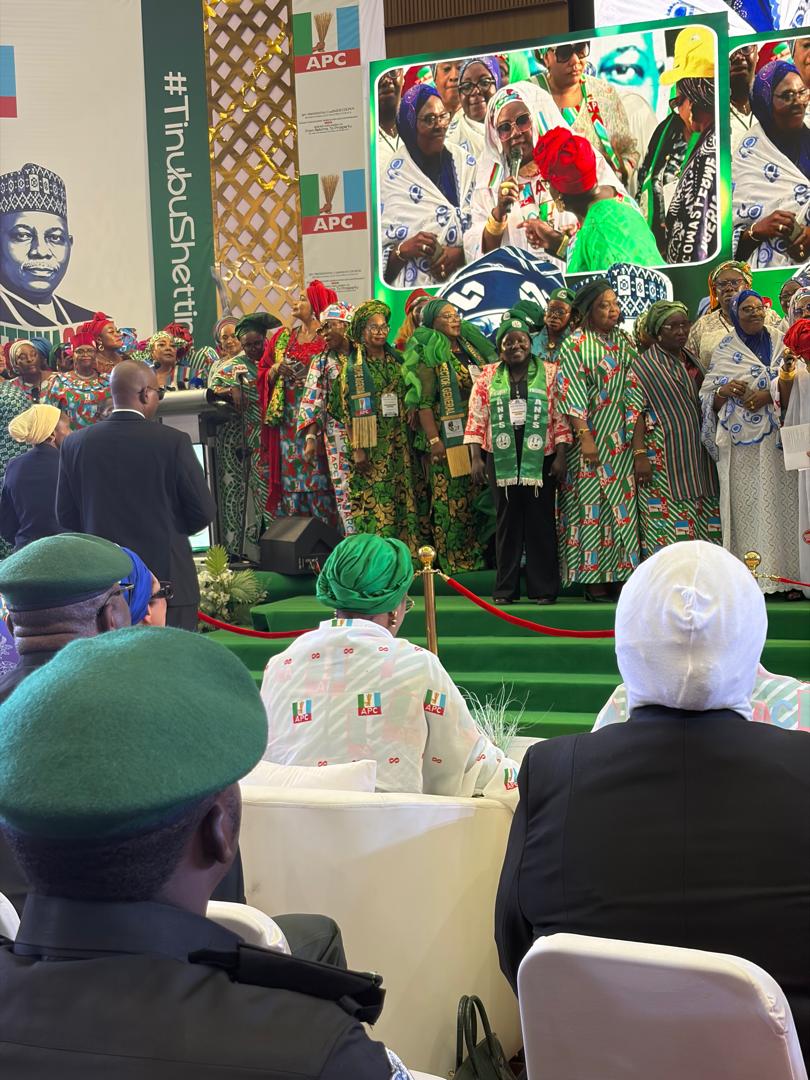
The women’s groups, drawn from Nigeria’s six geopolitical zones, formally joined the APC Presidential Campaign Council Women Wing and declared support for President Bola Ahmed Tinubu’s re-election bid at a mobilisation and empowerment summit held in Abuja.
Convened by First Lady Senator Oluremi Tinubu at the Bola Ahmed Tinubu International Conference Centre, the summit brought together APC women leaders, political organisers, state representatives and grassroots mobilisers.
 The gathering, themed “Renewed Hope Agenda 2.0: From Reforms to Prosperity,” underscored the ruling party’s determination to move its 2027 campaign beyond political gatherings in major cities and into wards, communities and households.
The APC Women Mobilisation Directorate said its grassroots structure currently covers 176,846 communities nationwide, with door-to-door engagement and community meetings already underway.
The directorate has also set an ambitious target of mobilising 40 million women votes for the Tinubu-Shettima ticket.
While the figure represents a campaign target rather than evidence of actual voter preference, it illustrates the enormous political importance the APC attaches to women as voters, organisers and grassroots influencers.
Beyond political mobilisation, the summit also placed emphasis on economic empowerment, with women beneficiaries receiving items including tricycles, sewing machines, refrigerators and agricultural equipment.
APC National Women Leader, Mary Alile Idele, urged women to take the policies, programmes and opportunities of the administration directly to families, markets and communities.
The First Lady also announced plans for six zonal mega rallies, culminating in a national rally in Abuja, providing the campaign with a coordinated structure across the country’s six geopolitical zones.
However, the real test of the mobilisation will begin after the Abuja summit.
The APC will have to translate endorsements, speeches and campaign structures into sustained engagement with voters whose immediate concerns extend beyond political promises.
For millions of Nigerian women, issues such as food prices, household income, employment, education, healthcare, security and access to finance and opportunities are likely to influence their political choices.
The mobilisation also raises a broader question about the place of women in Nigeria’s 2027 political contest.
Women constitute a formidable force as voters, campaign organisers and grassroots mobilisers. Yet, whether their growing influence at the grassroots will translate into greater representation as candidates, lawmakers and political decision-makers remains a critical issue.
For the APC, therefore, the Abuja summit represents more than the gathering of hundreds of women organisations. It is an attempt to build a political network capable of reaching voters at the most basic level of Nigerian society.
The next phase will determine whether the structure can move effectively from the conference hall to the wards, communities, markets and homes—where political loyalty is ultimately tested, one voter at a time.