
 By Chioma Vivian James
Governor Babagana Umara Zulum has ordered the immediate closure of the Internally Displaced Persons (IDP) camp in Bama, the largest displacement facility outside Maiduguri, marking another significant milestone in Borno State’s ongoing effort to restore normalcy and rebuild communities devastated by more than a decade of insurgency.
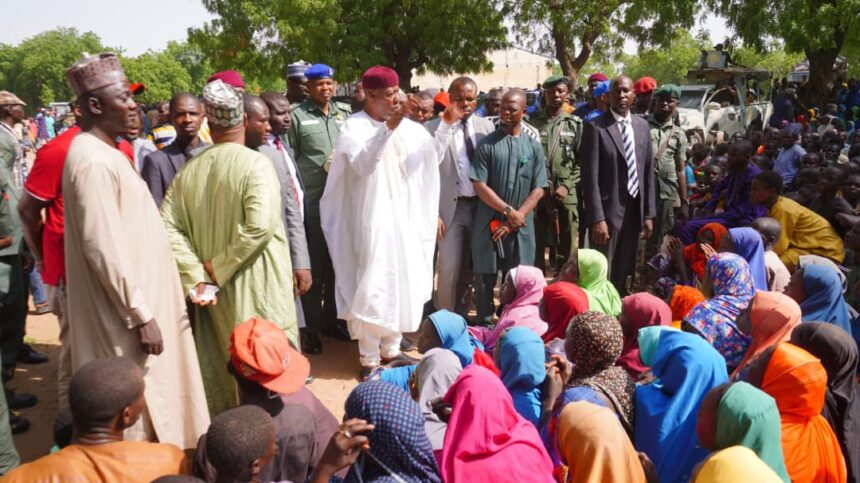
The Governor announced the decision on Thursday during an assessment visit to the Government Secondary School IDP Camp in Gwoza, where he also revealed plans to close the camp within the next two to three weeks.

According to Zulum, the closure of the camps is a direct result of the improving security situation across many communities previously occupied by Boko Haram insurgents.
“We visited Bama yesterday and supervised the screening of IDPs, and by 12 noon, Bama IDP camp should be closed,” the Governor stated. “Today we are here in Gwoza; we have profiled all of them, and Insha Allah, in the next two or three weeks this camp will also be closed.”
The announcement underscores the state government’s determination to transition thousands of displaced families from prolonged camp life back to their ancestral communities. Over the past seven years, the Borno State Government has successfully resettled residents in several communities across Bama Local Government Area, including Darajamal, Nguro Soye, Goniri, Banki, Abbaram, Ngoshe, Kirawa and Warabe, alongside numerous other locations across the state.
However, beyond the resettlement agenda, Governor Zulum raised concerns over growing criminal activities within the camps, describing them as emerging centres of social vices and insecurity.
“In our camps now, there is ongoing criminality. We have identified all of them and they will be resettled based on their localities and community leadership structures. Otherwise, Boko Haram and ISWAP elements are gradually infiltrating the camps,” he warned.

The Governor also expressed concern over what he described as the increasing influx of individuals returning to camps primarily to access humanitarian assistance. He revealed that government screening exercises had uncovered a substantial number of persons posing as displaced residents despite already living in their communities.
“Many residents who have homes are returning to the camps to receive handouts from non-governmental organisations,” Zulum said. “We will ensure that returns are sustainable. One year ago, this was almost a ghost camp with not more than 400 households. It is surprising that about 3,000 households are now back in the camp, and most of them are residents living within the town.”
The Governor maintained that the state can no longer sustain the continued operation of camps under such circumstances and emphasized the need to channel resources toward rebuilding communities and supporting long-term recovery.
The closure of the Bama camp and the planned shutdown of the Gwoza facility reflect a broader strategy aimed at ending dependency on humanitarian camps, strengthening community resilience, and consolidating gains recorded in the fight against insurgency.
As Borno gradually turns the page on one of the darkest chapters in its history, the success of the resettlement programme will depend not only on the return of displaced persons but also on ensuring security, livelihoods, social services and sustainable development in the communities they are returning to.
For many families, the closure of the camps represents more than an administrative decision—it symbolizes a long-awaited journey from displacement and uncertainty towards stability, dignity and renewed hope.