
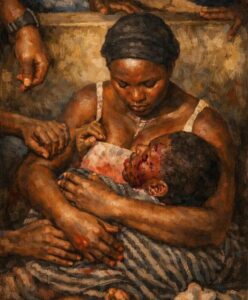
Renewed violence has struck Angwan Rukuba in Jos North Local Government Area of Plateau state, where gunmen opened fire on unarmed civilians in what witnesses described as a sudden and coordinated attack.
According to multiple reports, at least 12–20 people were killed, with many others injured after attackers stormed a local gathering spot and fired indiscriminately.
The government responded by imposing a 48-hour curfew, while panic and protests spread across affected communities.
The Rukuba killings are not an isolated tragedy, they are part of a long-running cycle of mass violence in the Middle Belt.
In the 2023 Plateau state massacres, about 200 people were killed across multiple communities.
Between December 2023 and February 2024, over 1,300 people were reportedly killed in Plateau alone.
Repeated attacks in 2024–2025 left dozens to hundreds dead in different villages.
These incidents show a systemic security breakdown, not random criminality.
Who Are the Perpetrators?
No group has officially claimed responsibility for the Rukuba attack. However, security analysts and past investigations point to a mix of actors:
1. Armed Militia & Bandits.
Many attacks in Plateau are linked to heavily armed groups operating on motorcycles, using guerrilla-style tactics.
2. Herder–Farmer Conflict.
A major driver is the decades-long conflict between: Nomadic Fulani herders sedentary farming communities.
This conflict is fueled by:
Land disputes, Grazing rights, Ethnic and religious tensions (often Muslim vs Christian communities).
3. Criminal Gangs & “Cultists”
Some recent reports suggest involvement of organized criminal gangs or cult groups, particularly in urban attacks like Rukuba.
Who Is Funding the Violence?
This remains one of the most critical and unresolved questions.
There is no single confirmed sponsor, but investigations and expert analyses suggest:
1. Local conflict economies:
Armed groups often sustain themselves through: Cattle rustling, Kidnapping for ransom, and Illegal taxation of rural communities.
Weapons are believed to enter Nigeria through porous borders, fueling banditry and militia activities.
2. Political & Elite Complicity (Allegations):
Some analysts and civil society groups allege:
Political actors may arm or tolerate militias for influence.
4. Weak accountability:
No definitive public evidence has directly identified a central sponsor of the Plateau killings.
Where Is the Government?
This question dominates public anger.
1. Security failures reports indicate delayed response, sometimes over 12 hours after attacks.
2. Communities often remain unprotected despite repeated warnings.
3. Authorities typically condemn attacks, deploy security forces, and Impose curfews.
But critics argue these are reactive, not preventive measures.
Accountability Gap:
Very few perpetrators are arrested or prosecuted.
Amnesty International describes the situation as an “inexcusable security failure”.
Public Reaction: Anger and Protest
Following the Rukuba killings: Residents defied curfew orders, mass protests erupted, demanding protection and justice.
There is a growing perception that:
The state has lost control of rural security.
The Bigger Picture:
The Plateau crisis reflects deeper national issues:
Weak rural policing, Ethno-religious fragmentation, Climate pressure on land and resources, Youth unemployment fueling recruitment into armed groups.
Conclusion:
The Rukuba killings are not just another tragic headline, they are a symptom of a collapsing security architecture in most parts of Nigeria.
Key unanswered questions remain: Why do attacks keep recurring despite military presence? Who truly arms and sustains these groups? Why has justice remained elusive for victims?
Until these questions are addressed with transparent investigations, decisive security reforms, and accountability, the cycle of violence in Plateau state is likely to continue.
Amb. Anderson Osiebe, Executive Director, HallowMace Foundation, Public Policy Expert and an Administrator writes from Abuja – Nigeria.