
As Political Tensions Build, Media Leaders Demand Zero Tolerance for Misinformation, Stronger Fact-Checking and Uncompromising Professional Standards
By Chioma Vivian James | Abuja
As Nigeria inches closer to the 2027 general elections, the International Press Centre (IPC) and the Guild of Corporate Online Publishers (GOCOP) have raised the alarm over the growing threat of fake news, digital misinformation and politically motivated propaganda, warning that unchecked information disorder could undermine electoral credibility, fuel political tensions and threaten the nation’s democratic stability.
The organisations have consequently challenged Nigerian journalists, editors and online publishers to uphold the highest standards of professional ethics, strengthen fact-checking mechanisms and prioritise public-interest journalism, stressing that the media must not become a tool for political manipulation or the propagation of false narratives.
They warned that the increasing circulation of fabricated reports, manipulated photographs and videos, hate speech and divisive political content could distort public opinion, mislead voters and erode public confidence in the electoral process.
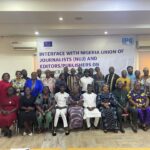
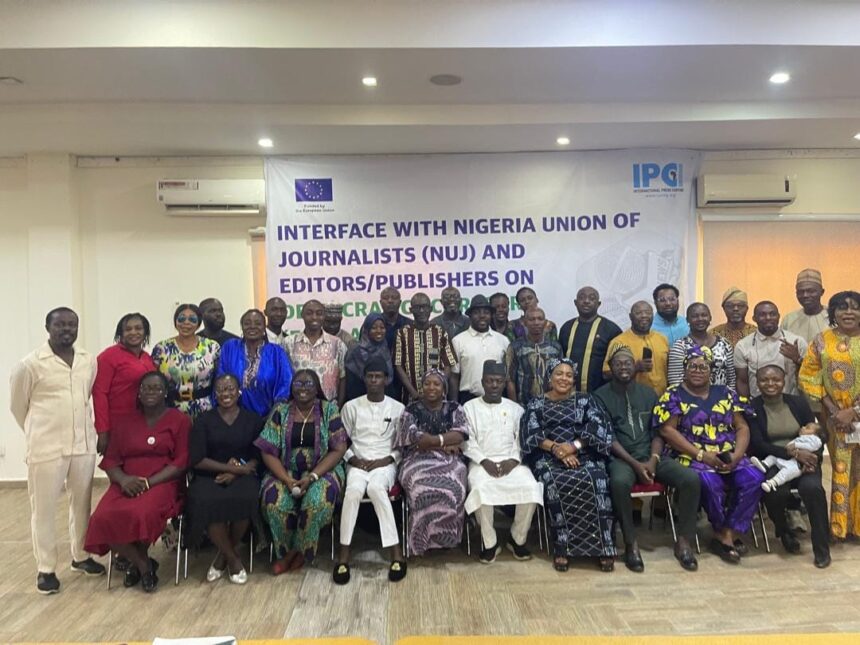
The warning was issued in Abuja during a one-day interface with journalists and online editors on professional and democratic accountability journalism ahead of the 2027 general elections.
Speaking at the engagement, the Executive Director of IPC, Dr. Lanre Arogundade, represented by the organisation’s Programme Officer, Melody Akinjiyan, challenged media practitioners to move beyond routine coverage of political campaigns, rallies and candidates to more purposeful journalism that interrogates governance and reflects the genuine concerns, needs and aspirations of Nigerians.
He stressed that elections should not be reduced to contests between political parties and their candidates, insisting that citizens’ welfare, governance performance and public accountability must remain at the centre of electoral reporting.
According to him, the media has a fundamental responsibility to provide citizens with credible information, scrutinise campaign promises, hold political leaders accountable and create platforms for diverse voices in the democratic process.
He maintained that the credibility of elections depends significantly on the quality, balance and accuracy of information available to voters.
Arogundade therefore called for stronger investigative and issue-based journalism, urging newsrooms to pay greater attention to critical national concerns, including the economy, education, healthcare, insecurity, unemployment and infrastructure.
He challenged journalists to examine their editorial priorities and determine whether their coverage adequately reflects the everyday struggles of ordinary Nigerians or places disproportionate emphasis on political personalities, party activities and campaign theatrics.
The IPC executive director also advocated inclusive electoral reporting that gives women, young people, persons with disabilities and other marginalised groups meaningful visibility in political and democratic conversations.
Addressing the growing challenges of the digital information ecosystem, he acknowledged that social media platforms had expanded opportunities for public participation but warned that they had equally become channels for the rapid spread of fabricated information, manipulated content and divisive political narratives.
He cautioned journalists against sacrificing accuracy for speed, emphasising that verification must remain non-negotiable in responsible journalism.
“Fact-checking and verification should not be treated as optional additions to journalism. They are integral to responsible electoral reporting,” he emphasised.
Arogundade further underscored the importance of journalists’ safety and editorial independence, calling for an enabling environment where media professionals could discharge their constitutional responsibilities without intimidation, harassment or unlawful interference.
GOCOP: Journalists Must Not Become Agents of Misinformation
Reinforcing IPC’s concerns, GOCOP President, Mr. Danlami Nmodu, urged journalists and online publishers to exercise extreme caution when handling photographs, videos and other digital materials circulating on social media.
He warned that sophisticated digital manipulation had made it increasingly difficult to distinguish authentic content from fabricated materials, insisting that journalists must establish the authenticity of information before publishing.
“Before you publish, make sure that you are sure of what you are selling on the market,” Nmodu cautioned.
He observed that even experienced journalists could fall victim to sophisticated digital manipulation if they failed to undertake proper verification.
According to him, the consequences of publishing false information go beyond damaging the reputation of media organisations, as misleading reports could shape voters’ perceptions, distort public debate and ultimately influence electoral decisions.
Nmodu stressed that journalists must recognise the enormous responsibility attached to their profession, particularly during election periods when inaccurate information could have far-reaching consequences for national peace, political stability and democratic development.
“The essence of our election is to elect leaders who will serve us. If we poison the minds of the people with facts that are not correct, they may elect the wrong people,” he said.
He urged media practitioners to resist political pressure, sensationalism and the unhealthy competition to break news at the expense of accuracy and credibility.
The GOCOP president also acknowledged the European Union for supporting initiatives designed to strengthen journalism and create opportunities for professional engagement among media practitioners.
Earlier, Arogundade expressed appreciation to the European Union and other development partners for their support in organising the interface.
He also recognised the contributions of the resource persons, Dr. Sarah Gambo of the Department of Broadcasting, Film and Multimedia Studies, University of Abuja, and Mr. Ahmad Aluko, a researcher and information disorder analyst, whose presentations provided professional perspectives on the challenges confronting electoral journalism.
He urged participants to translate the lessons from the engagement into practical newsroom policies, stronger verification procedures and more accountable reporting as the country approaches the 2027 general elections.
Beyond Reporting: The Media’s Battle for Democratic Credibility
The engagement highlights the growing importance of credible journalism in an increasingly complex political and digital environment where information can be manipulated, weaponised and circulated within seconds.
As political activities intensify ahead of the 2027 elections, the responsibility of the media will extend beyond reporting political campaigns, party activities and electoral controversies. Journalists must interrogate political promises, expose misinformation, amplify citizens’ concerns and demand accountability from those seeking public office.
The stakes are particularly high because misinformation does not merely mislead individuals; it can influence electoral choices, deepen divisions, weaken democratic institutions and threaten national cohesion.
For Nigeria’s media industry, the coming electoral season presents a defining test of professional integrity and public responsibility.
The message from IPC and GOCOP is unmistakable: the media must defend truth, protect public trust and ensure that political propaganda does not overpower credible journalism.
Ultimately, democracy cannot thrive on misinformation. It requires an informed electorate, accountable leadership and a media that places truth above political interests, professional integrity above sensationalism and national interest above the pressure to publish unverified information.