

Presidential Adviser Says Reforms Are Unlocking Nigeria’s 200 Trillion Cubic Feet Gas Reserves for Industrialisation, Energy Security and Job Creation
By Chioma Vivian James | Abuja
Nigeria has recorded four Final Investment Decisions (FIDs) in gas projects in less than two years, while average daily gas production has increased from approximately seven billion cubic feet to eight billion cubic feet, signalling renewed investment momentum in the country’s gas sector.
The Special Adviser to the President on Energy (Oil and Gas), Mrs Olu Arowolo Verheijen, attributed the development to reforms introduced by President Bola Ahmed Tinubu’s administration to remove investment barriers, unlock the country’s vast gas resources and position the sector as a major driver of industrialisation and economic growth.
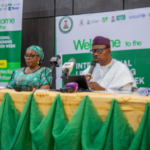
Verheijen disclosed this on Wednesday while delivering the keynote address at the Africa Interviews Sustainability Forum 2026 in Lagos, which examined the theme, “Energy Security and Africa’s Energy Transition: Defining the Role of Gas.”
She said Nigeria’s proven gas reserves of more than 200 trillion cubic feet represented an enormous economic opportunity, but stressed that resource abundance alone could not guarantee prosperity without sustained investment and a conducive business environment.
“A country can sit on enormous natural wealth and fail to turn it into energy to power industry, industries that create jobs and jobs that help us grow incomes,” she said.
According to her, predictable incentives, policy consistency and a stable investment environment are essential to transforming natural resources into commercially viable projects capable of generating employment, increasing incomes and supporting sustainable economic development.
Reforms Drive New Gas Investments
Verheijen said President Tinubu, upon assuming office in 2023, directed his administration to identify and address the obstacles preventing investment from matching Nigeria’s economic potential.
She explained that gas had become a central pillar of the administration’s reform agenda because of its critical role in electricity generation, manufacturing, transportation, fertiliser production and cleaner household cooking.
Nigeria, she noted, possesses substantial gas resources that could support industrial expansion, improve electricity supply, strengthen domestic energy security and increase the competitiveness of local industries.
“Gas has been a priority within that reform agenda because Nigeria is, as you all know, even more gas-rich than it is oil-rich, and the gas is arguably the most important physical resource for industrialisation,” she said.
The presidential adviser disclosed that Nigeria had recorded four gas-related FIDs in less than two years, including the Ima project in September 2026.
She also highlighted the growing contribution of indigenous producers to domestic gas supply, describing their participation as an important element in expanding production and deepening investment across the sector.
The developments, she said, reflected progress in the government’s efforts to establish a more attractive environment for investors and increase the utilisation of gas across key segments of the economy.
Government Targets Cleaner Cooking, Settles Gas Debts
Beyond attracting investment, Verheijen highlighted government measures aimed at expanding access to liquefied petroleum gas (LPG) for household cooking and reducing dependence on traditional fuels such as firewood.
She said the government had introduced import duty waivers and zero-rated value-added tax measures for LPG and gas cylinders to encourage the adoption of cleaner cooking alternatives.
The measures, she explained, were intended to make LPG more accessible to households while supporting the transition towards cleaner domestic energy sources.
“A gas-rich nation cannot be comfortable while families remain stuck in the age of firewood,” she said.
The adviser also disclosed that more than ₦100 billion in longstanding gas debts had been settled since January 2026 under the administration’s Presidential Power Sector Financial Reforms Programme.
The intervention is part of broader efforts to address financial obligations within the power sector, improve confidence among gas suppliers and strengthen the gas-to-power value chain.
Resolving outstanding debts is particularly important to the electricity sector because reliable payments to gas suppliers can help sustain fuel supplies to power plants, although improved generation also depends on other infrastructure and operational factors.
Africa Must Chart Its Own Energy Transition
Addressing the broader question of Africa’s energy transition, Verheijen called on African countries to pursue strategies that balance environmental sustainability with energy security, industrial development and job creation.
She argued that the continent must focus on converting its natural resources into tangible economic benefits rather than treating resource ownership as an end in itself.
“For Africa, the energy transition must mean transformation, molecules converted into megawatts, fertilizer, petrochemicals, cleaner mobility, manufacturing, jobs and exports,” she said.
She maintained that natural gas could play a significant role in supporting Africa’s industrial development, particularly in countries seeking to expand electricity access, develop manufacturing capacity and create productive employment.
However, she stressed that African countries must retain the freedom to determine the pace and direction of their energy transitions according to their economic realities, development priorities and national circumstances.
“The energy transition must also mean agency. Africa’s right to decide for itself how fast it decarbonizes, rather than having those choices made for us by others. It is about affirming our right to be the authors of our own energy transition,” she said.
Her position underscored the need for African governments to pursue energy policies that reflect local development needs while remaining responsive to global climate commitments.
Methane Management, Community Benefits Remain Critical
While advocating greater utilisation of natural gas, Verheijen emphasised the importance of measuring and mitigating methane emissions associated with gas production and development.
She also called for host communities to benefit meaningfully from projects undertaken in their areas, stressing the importance of ensuring that energy investments translate into tangible improvements in people’s lives.
Her remarks highlighted the need to balance investment growth with environmental responsibility, social inclusion and sustainable development.
For Nigeria, the challenge extends beyond attracting capital to ensuring that increased gas production translates into more reliable electricity, stronger manufacturing, expanded employment opportunities and improved household welfare.
The country’s ability to achieve these outcomes will depend on sustained investment, effective implementation of reforms, adequate infrastructure and a commercially viable gas market.
Turning Gas Wealth Into Lasting Prosperity
Expressing optimism about Nigeria’s gas prospects, Verheijen urged stakeholders to sustain the reform momentum and assess progress by the economic and social benefits delivered to citizens.
She maintained that the country’s substantial gas reserves offered an opportunity to strengthen energy security, stimulate industrial activity, expand exports and improve living standards if effectively harnessed.
“Nigeria’s gas future is promising. If we stay the course, energy security is a journey and every day we must ask ourselves the pivotal question, are we making progress?” she said.
She added: “History will not ask what we possessed, it will ask what we did with it and whether we turned it into lasting prosperity for our people.”
The Africa Interviews Sustainability Forum 2026 brought together stakeholders to discuss the role of natural gas in strengthening energy security, attracting investment and shaping Africa’s energy transition.
The discussions reinforced the importance of translating the continent’s energy resources into productive investments that support industrialisation, economic resilience and sustainable development.