

Stakeholders Back 30% Value-Addition Bill as RMRDC Projects 1.2 Million Jobs, $1.2bn in Export Gains
By Chioma Vivian James | Abuja
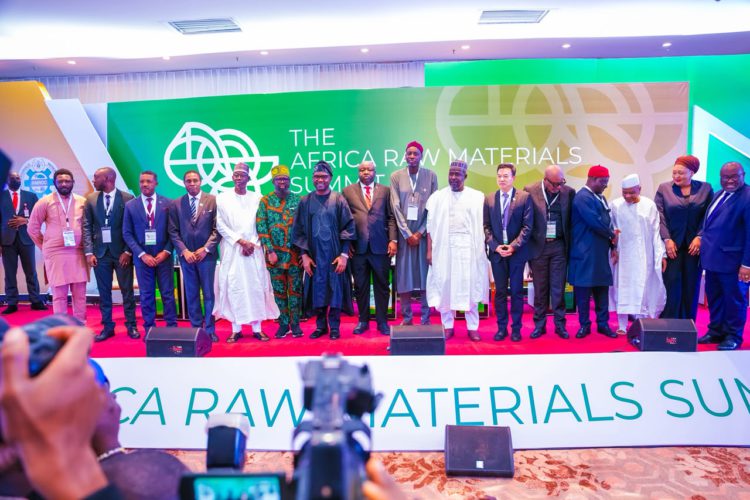
Stakeholders at the second Africa Raw Materials Summit 2026 have called for stronger policies, investment and local processing of raw materials to accelerate Africa’s industrial growth, create jobs and reduce dependence on imported finished products.
The summit, held in Abuja under the theme “From African Feedstock to African Factories,” featured calls for the passage of a proposed bill requiring at least 30 per cent local processing of raw materials before export.
Director-General of the Raw Materials Research and Development Council (RMRDC), Prof. Nnanyelugo Ike-Muonso, said policy continuity under President Bola Ahmed Tinubu was critical to sustaining Nigeria’s industrial transformation, attracting investments and expanding manufacturing.
He projected that the proposed Raw Materials Value Addition Bill could generate more than 1.2 million high-value jobs and increase annual non-oil export earnings by over $1.2 billion.
Ike-Muonso also highlighted the Federal Government’s Nigeria First Policy and Nigeria Industrial Policy 2025 as initiatives to strengthen domestic production. He disclosed that more than ₦644.9 billion was mobilised through the Bank of Industry in 2025, supporting approximately 1.7 million direct and indirect jobs.
He added that RMRDC was developing processing technologies and pilot plants for mineral beneficiation, lithium concentration, agricultural processing and chemical extraction to promote local industrial capacity.
Enoh, Sudan Minister Advocate Value Addition
The Minister of State for Industry, Trade and Investment, Senator John Enoh, urged lawmakers to pass the proposed 30 per cent value-addition bill, warning that exporting raw materials for processing abroad deprives Africa of jobs, technical expertise and revenue.
He cited lithium in the Democratic Republic of Congo, cocoa in Ghana and Côte d’Ivoire, and copper in Zambia as resources that could drive industrial development through local processing.
Sudan’s Minister of Mineral Resources, Dr. Dayan Tahar, identified local refining, reliable energy, improved market access and measures to curb mineral smuggling as priorities. He also called for transparent investment procedures and stronger collaboration among governments, universities and industries.
Emejuo, UNIDO Demand Enforceable Policies
Director-General and Chief Executive Officer of the Pan-African Alliance for Small and Medium Industries, Dr. Henry Emejuo, called for enforceable policies requiring more raw materials to be processed locally before export.
He warned that Africa risked passing its mineral wealth to future generations without securing the economic benefits.
“This is our time. We must make up our mind to do this for the generation unborn,” he said, urging governments to turn commitments into factories, jobs and competitive industries.
Emejuo identified the African Continental Free Trade Area (AfCFTA) as an opportunity to expand trade in processed goods and strengthen regional manufacturing and supply chains.
Similarly, UNIDO Country Representative, Ambassador Philbert Abaka, urged African countries to move from exporting raw materials to producing value-added goods. He called for coordinated action by governments, manufacturers, researchers, financiers and development partners, stressing that the summit’s target of at least 10 per cent value addition must translate into measurable results.
Experts Highlight Electric Vehicle, Manufacturing Opportunities
Director-General of the National Automotive Design and Development Council, Otunba Joseph Oluwemimo Osanipin, said local lithium processing could position Nigeria to develop electric vehicle and energy-storage industries.
He noted that batteries account for an estimated 40 to 55 per cent of an electric vehicle’s cost, stressing the need to commercialise local research and strengthen collaboration between universities and manufacturers.
Director-General of the Nigerian Geological Survey Agency, Prof. Olusegun Ige, disclosed that about 60 per cent of raw materials used in Nigerian production were sourced from abroad. He called for stronger collaboration between geological experts and manufacturers to identify viable mineral deposits and expand local sourcing.
Meanwhile, Chief Strategy and Development Officer and Divisional Head of Strategy, Policy and Research at the Bank of Industry, Dr. Uche Nwachukwu, said some food and beverage companies in the bank’s portfolio had reduced raw-material imports by 67 per cent.
He emphasised the need for long-term industrial financing to move research and development into commercial production, create jobs and strengthen domestic supply chains.
The stakeholders agreed that Africa must leverage its abundant natural resources through local processing, reliable infrastructure, technology, investment and effective policies.
They also stressed that the success of Nigeria’s proposed value-addition legislation would depend on effective implementation, reliable electricity, efficient transportation, access to finance and adequate processing capacity.
The summit underscored the need to transform Africa from a supplier of raw materials into a competitive manufacturing hub capable of creating jobs, boosting exports and retaining greater economic value on the continent.