
With over 200,000 Nigerians having served in 41 UN, AU and ECOWAS peace missions since independence, Defence Minister renews push to deepen Nigeria’s military diplomacy and global peace engagements
By Chioma Vivian James
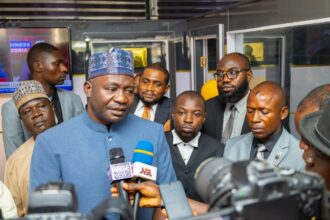
Nigeria’s long-standing reputation as a contributor to international peace and security has received renewed attention at the 81st Session of the United Nations General Assembly (UNGA), with the Minister of Defence, General Christopher Gwabin Musa (rtd.), signalling the Federal Government’s determination to strengthen the country’s role in global peacekeeping and defence diplomacy.
Musa made the commitment in New York during Nigeria’s participation in the high-level General Assembly, where he joined Vice President Kashim Shettima, head of Nigeria’s delegation, and other senior officials at the opening of the 2026 UNGA.
The Minister’s engagement comes against the backdrop of Nigeria’s extensive history of participation in multinational peace operations. United Nations officials have reported that more than 200,000 Nigerian military, police and civilian personnel have served in 41 UN, African Union and ECOWAS peace missions since independence in 1960. The missions have covered operations across Africa and other regions of the world.
 For Nigeria, peacekeeping has long served as an important instrument of foreign policy and regional security engagement. From the country’s early deployment to the Congo in 1960 to its subsequent involvement in Liberia, Sierra Leone, Darfur, Mali and other theatres, Nigerian personnel have played roles in efforts aimed at stabilisation, conflict management and civilian protection.
Against this historical background, Musa’s latest intervention in New York signals an intention to reinforce that legacy while adapting Nigeria’s international security engagement to the changing nature of modern conflicts.
Defence Diplomacy Takes Centre Stage
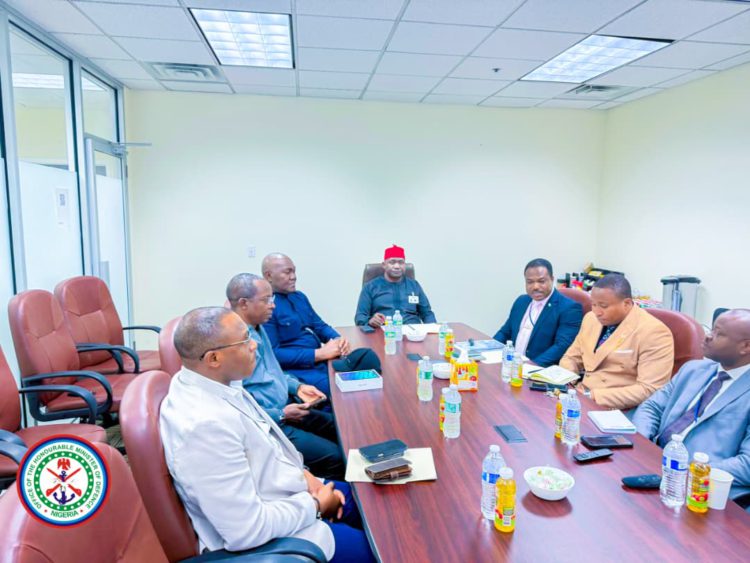
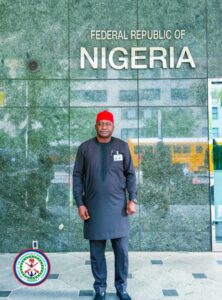
Following the opening of the General Assembly, the Defence Minister undertook an operational visit to the Defence Section of Nigeria’s Permanent Mission to the United Nations in New York.
There, he received a strategic briefing on Nigeria’s defence diplomacy, operational activities and commitments within the UN system from the Defence Attaché to the United Nations, Brigadier General E.A. Koleosho.
Musa commended Koleosho and his team for what he described as their professionalism, loyalty and commitment to the ideals of the United Nations and the Nigerian Armed Forces.
He also underscored the importance of effective representation of Nigeria’s defence interests within the multilateral system, particularly at a time when international security cooperation is being tested by increasingly complex conflicts and transnational threats.
The Minister used the engagement to reinforce the government’s determination to restore and expand Nigeria’s active footprint in international peace and security initiatives, with peacekeeping forming a significant component of that renewed engagement.
 Building on a Six-Decade Legacy
Nigeria’s peacekeeping record stretches back more than six decades.
Since independence, the country has participated in numerous multinational operations and has supplied military, police and civilian personnel to missions under the UN, AU and ECOWAS frameworks.
The United Nations has described Nigeria as a longstanding contributor to peace operations, noting that more than 200,000 Nigerian personnel have participated in 41 missions since 1960.
Nigeria’s involvement has also come at considerable human cost. UN officials reported in 2025 that 124 Nigerian peacekeepers were lost between 1948 and 2015, highlighting the sacrifices associated with the country’s international security commitments.
Beyond the statistics, Nigeria’s peacekeeping history has provided opportunities for its military personnel to gain experience in multinational command structures, conflict mediation, civilian protection and post-conflict stabilisation.
It has also enabled the country to exercise influence within regional security arrangements while supporting collective responses to crises beyond its borders.
A Changing Global Security Environment
The renewed emphasis on peacekeeping comes at a time when the character of international conflicts is changing rapidly.
Contemporary peace operations increasingly confront terrorism, violent extremism, organised crime, cyber threats, political instability and climate-related security pressures. UN officials have consequently stressed the need for peacekeeping missions to become more adaptable, technologically equipped and responsive to increasingly dangerous operating environments.
For Nigeria, these challenges have added significance because of the country’s continuing domestic security concerns and its strategic role in West Africa.
The Defence Ministry’s renewed focus on international engagement therefore places Nigeria’s peacekeeping commitments within a wider framework of defence diplomacy, regional cooperation and international security partnerships.
Strengthening Nigeria’s Voice at the UN
Musa’s engagement in New York also highlights the importance of maintaining an effective Nigerian defence presence within the UN system.
By reviewing the activities of the Defence Section and engaging personnel responsible for representing Nigeria’s military interests at the organisation, the Minister emphasised the need for sustained professional engagement and strategic coordination.
The objective, according to the thrust of his engagement, is not merely to preserve Nigeria’s historical peacekeeping record but to strengthen the country’s capacity to participate meaningfully in contemporary international security initiatives.
Nigeria’s experience in multinational operations gives the country a longstanding institutional base from which to engage other nations and international organisations on peace and security matters.
From Peacekeeping Legacy to Renewed Global Engagement
As the 81st UN General Assembly brings world leaders together to deliberate on global security, development and multilateral cooperation, Nigeria’s peacekeeping history provides an important dimension to its international presence.
More than 200,000 Nigerian personnel having served across 41 UN, AU and ECOWAS missions represents a significant record of international security participation.
Musa’s New York engagement consequently places that history within a renewed government effort to deepen Nigeria’s defence diplomacy and international security partnerships.
For the Defence Ministry, the message is clear: Nigeria’s decades-long contribution to peace operations remains a foundation for continued engagement with the international community, while its future participation will need to respond to the evolving demands of global peace and security.
As UNGA 81 unfolds, the renewed emphasis on peacekeeping adds a significant security and diplomatic dimension to Nigeria’s presence at the global gathering.