
Nigeria deepens defence cooperation with Czech Republic as Abuja targets modern platforms, specialised training, maintenance support and stronger domestic military-industrial capacity
By Chioma Vivian James
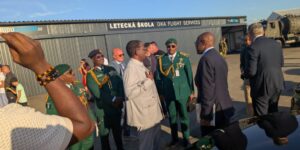
Nigeria has stepped up efforts to strengthen its military capabilities and deepen international defence cooperation, with the Minister of State for Defence, Bello Muhammed Matawalle, leading a high-level delegation to the Czech Republic in pursuit of advanced aircraft, weapons systems, specialised training and technology-transfer opportunities.
Matawalle’s engagement formed part of Nigeria’s participation in the 17th Czech Air Force Days and 26th NATO Days in Ostrava, a major international defence exhibition that brought together military and security technologies from 14 countries and NATO, with almost 80 aircraft showcased.
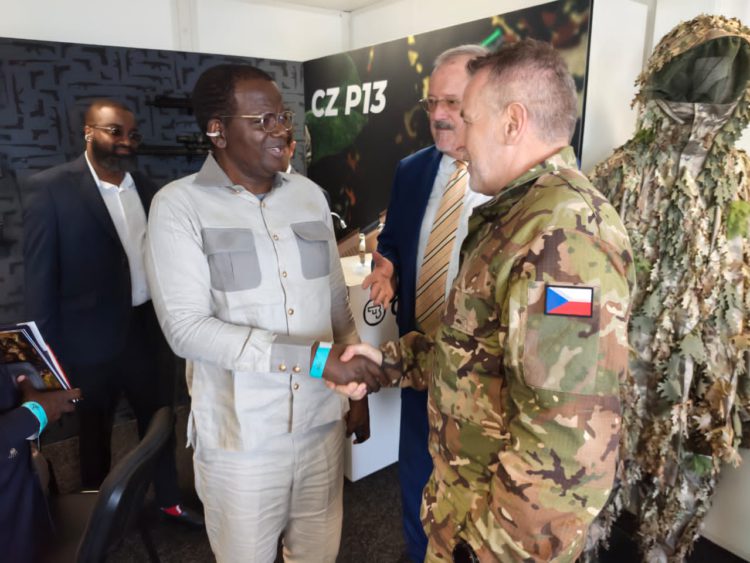
At the Mošnov Airfield exhibition, the Nigerian delegation inspected a wide range of Czech-made air and land platforms while engaging senior Czech military officials on opportunities to strengthen Nigeria’s operational capabilities in the fight against terrorism and banditry.
Among the platforms examined were the L-39 Skyfox jet trainer and light-attack aircraft and the L-410NG multipurpose transport aircraft. The delegation also reviewed weapons systems, tactical communications equipment, surveillance technologies and ballistic-protection systems.
The discussions reflected Nigeria’s growing interest in acquiring modern military platforms capable of improving the mobility, protection, surveillance and operational effectiveness of its armed forces.
FROM AIRCRAFT TO INFANTRY SYSTEMS
The Nigerian delegation also visited Colt CZ Group, where officials presented a range of small arms and military equipment, including the BREN-2 and BREN-3 assault rifles, M4 and AR-15 rifles, EVO-3 sub-machine gun, ammunition and ballistic protective equipment.
At MESIT, the delegation examined tactical radio and passive-surveillance technologies, including the VERA system, while defence manufacturers provided briefings on the capabilities and possible operational applications of their technologies.
Matawalle said the technologies displayed at the exhibition were relevant to Nigeria’s security requirements, particularly the need to provide troops involved in counter-terrorism and counter-banditry operations with modern and effective equipment.
The Minister’s delegation included the Executive Vice Chairman and Chief Executive Officer of the National Agency for Science and Engineering Infrastructure (NASENI), Khalil Sulaiman Halilu; Chairman of the Presidential Implementation Committee on Technology Transfer, Dahiru Muhammed; as well as representatives of the Ministry of Defence and the Defence Industries Corporation of Nigeria (DICON).
BEYOND HARDWARE: NIGERIA TARGETS TECHNOLOGY TRANSFER
A significant aspect of the Czech engagement was the emphasis on technology transfer, equipment maintenance and the development of Nigeria’s domestic defence-industrial capacity.
Rather than focusing solely on the acquisition of military hardware, the discussions opened opportunities for Nigerian institutions to strengthen their capacity to absorb, maintain and eventually support sophisticated defence technologies locally.
Czech defence companies indicated their readiness to explore support for Nigeria through modern platforms and associated technologies, while engagements involving DICON, NASENI and other Nigerian institutions highlighted the importance of building sustainable domestic capacity.
For Nigeria, the approach is particularly significant as the country seeks to strengthen DICON and expand indigenous defence manufacturing, with the broader objective of reducing dependence on imported equipment and improving the sustainability of military operations.
HIGH-LEVEL MILITARY ENGAGEMENT
Matawalle also held separate meetings with senior Czech military commanders, including the Chief of the General Staff of the Czech Armed Forces, Lt. Gen. Miroslav Hlaváč; Commander of the Czech Land Forces, Maj. Gen. Josef Trojánek; and Commander of the Czech Air Force, Brig. Gen. Petr Tománek.
The discussions focused on three major areas: training, equipment maintenance and the acquisition of technologically advanced platforms for the Armed Forces of Nigeria.
According to the Defence Ministry, the Czech military leadership expressed willingness to provide technical and military support to Nigeria as it continues its campaign against terrorism and banditry.
CZECH MILITARY MODERNISATION
Nigeria’s engagement comes at a time when the Czech Republic itself is undertaking significant military modernisation.
The 2026 Czech Air Force Days showcased an expanding inventory of modern air and ground systems, including the C-390 Millennium transport aircraft. The Czech Republic is also pursuing the acquisition of 24 F-35 fifth-generation fighter aircraft, while its helicopter fleet is undergoing transition to H-1 platforms.
Against this background, Nigeria’s participation in the exhibition provided an opportunity to examine modern defence technologies and explore areas of cooperation that could contribute to the transformation of the country’s military capabilities.
BUILDING A LONG-TERM DEFENCE PARTNERSHIP
The Matawalle-led engagement therefore extends beyond a conventional visit to a defence exhibition.
It places advanced aircraft, infantry weapons, tactical communications, surveillance systems, training, maintenance and technology transfer within a broader framework of bilateral defence cooperation.
For Abuja, the central issue is not only the acquisition of new military equipment but also the ability to train personnel, maintain sophisticated systems and develop the domestic industrial capacity required to sustain them.
If the discussions translate into concrete agreements, the engagement could expand Nigeria-Czech defence relations from equipment acquisition towards longer-term capability development, technical cooperation and industrial collaboration.
As Nigeria continues to confront terrorism, banditry and other security challenges, the push for modern military technology and stronger defence-industrial partnerships remains an important component of the Federal Government’s broader effort to enhance the operational capacity of the Armed Forces.