
Defence Minister Urges Stronger Intelligence Sharing, Joint Operations, Technology Investment and African-Led Solutions as Criminal Networks Exploit Borderless Threats
By Chioma Vivian James
The Minister of State for Defence, Bello Muhammed Matawalle, has called for a fundamental reset in Africa’s approach to security, warning that terrorism, transnational organised crime and emerging technological threats are evolving beyond the capacity of individual countries to confront them alone.
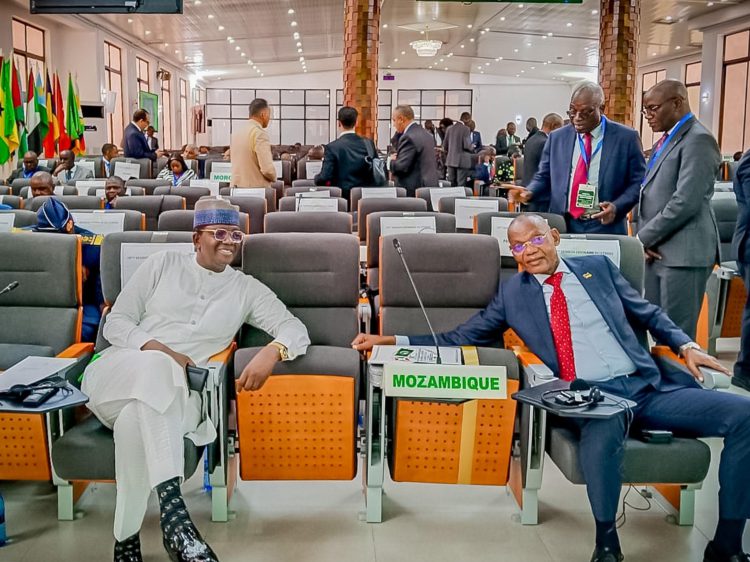
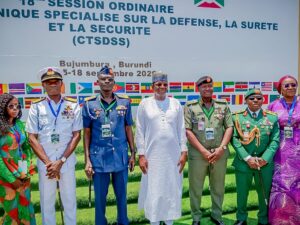
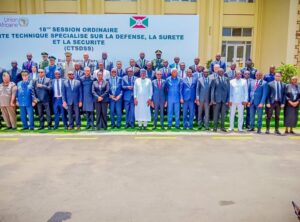
Matawalle made the call on Saturday in Bujumbura, Burundi, while addressing the 18th Ordinary Session of the African Union’s Specialised Technical Committee on Defence, Safety and Security (STCDSS) and the 21st Ordinary Meeting of African Chiefs of Defence Staff and Heads of Safety and Security.
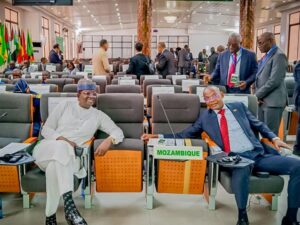
The high-level gathering brought together Defence Ministers, military chiefs, heads of safety and security, AU officials and members of the diplomatic corps to deliberate on practical measures for addressing the continent’s increasingly complex security environment.
The Minister said the interconnected nature of Africa’s security challenges demanded stronger continental cooperation, intelligence sharing and coordinated operations, rather than isolated national responses.
 According to him, terrorism and violent extremism, transnational organised crime, human and arms trafficking, piracy, cyber threats, unconstitutional changes of government and communal conflicts now constitute interconnected threats to peace and stability across the continent.
“These threats are not confined by national borders. Consequently, no single country can effectively address them in isolation,” Matawalle said.
He stressed that the changing character of insecurity had further underscored the strategic importance of the STCDSS and the need for African countries to reinforce existing mechanisms under the African Peace and Security Architecture.
Matawalle advocated closer collaboration among the African Union, Regional Economic Communities and individual member states, particularly through stronger intelligence-sharing frameworks, multinational military operations and sustained political commitment to the African Standby Force.
He noted that the successes recorded through coordinated military operations across the continent had demonstrated the value of pooling intelligence, resources and operational capabilities.
 AI, Drones and Cyber Capabilities
Beyond conventional security threats, Matawalle drew attention to what he described as a rapidly changing technological dimension of African insecurity.
He warned that criminal and extremist networks were increasingly exploiting emerging technologies, including drones, artificial intelligence and cyber capabilities, to strengthen their operations.
According to him, such technologies are being exploited for recruitment, radicalisation, financial crimes and other illicit activities, creating new challenges for governments and security institutions.
The Minister therefore urged African countries to accelerate investment in technological innovation, research and development, intelligence capabilities and human capital.
“Africa must invest in technological innovation, research and development, intelligence capabilities and human capital, while ensuring that technology is employed responsibly and in accordance with international law,” he said.
His warning highlights the growing need for African security institutions to move beyond traditional military capabilities and develop the technological expertise required to identify, prevent and respond to emerging forms of crime and terrorism.
Security Beyond the Battlefield
Matawalle also cautioned against an overreliance on military force as the sole solution to Africa’s security problems.
He argued that sustainable peace would remain difficult to achieve unless governments addressed the socioeconomic conditions that can contribute to instability.
Among the factors he identified were poverty, unemployment, weak institutions, inadequate access to education and social services, climate pressures and limited economic opportunities.“Our approach to security must therefore be comprehensive,” he said.
The Minister maintained that military and security interventions must be complemented by effective governance, youth empowerment, education, economic development, stronger justice systems and social inclusion.
This, he said, would help address both the immediate security threats facing African countries and some of the conditions that make communities vulnerable to radicalisation, organised crime and violent conflict.
Nigeria Reaffirms Commitment to African Security
Reaffirming Nigeria’s commitment to continental peace and security, Matawalle said the country remained firmly committed to the principle of “African solutions to African problems.”
He said Nigeria would continue to contribute to regional and continental peace-support operations, counter-terrorism initiatives and capacity-building programmes.
He also commended the African Union and the STCDSS for their continued efforts towards strengthening peace, security and stability across the continent.
The Bujumbura meeting comes at a time when terrorism, organised crime, cyber threats, illicit trafficking and other forms of instability increasingly overlap across national boundaries.
The convergence of these threats, alongside the rapid emergence of technologies that can be exploited by criminal and extremist groups, is placing greater pressure on African governments to strengthen cooperation and develop a coordinated security architecture.
Matawalle’s intervention therefore places renewed emphasis on a continental approach built around intelligence sharing, joint operations, technological preparedness, socioeconomic development and stronger regional institutions.
For Africa, the message from Bujumbura is clear: as threats become increasingly borderless and technology-driven, the continent’s security response must become equally coordinated, innovative and forward-looking.