
By:Chioma Vivian James
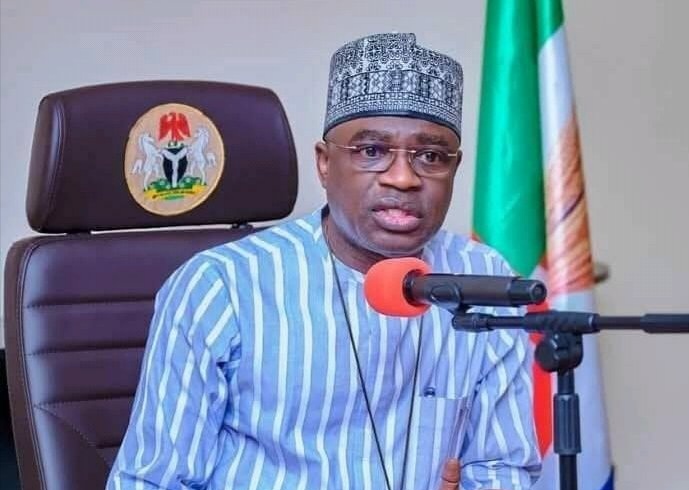
Governor Hyacinth Alia of Benue State has reignited the national conversation on state policing, insisting that Nigeria can no longer afford to allow fears of abuse to stand in the way of a critical security reform.
Speaking at the Meet-the-Press programme at the Presidential Villa, Abuja, the Benue governor argued that while concerns about potential misuse of state police are understandable, they should not become an excuse for maintaining a security structure that is increasingly struggling to meet the country’s growing challenges.
Alia, who described himself as one of the earliest advocates of state police, said officers recruited from local communities possess an advantage that cannot be replicated by a centrally controlled policing system. According to him, people who grow up within communities understand the terrain, culture and local dynamics better than officers deployed from distant parts of the country.
His position comes amid renewed calls for security reforms as communities across Nigeria continue to grapple with banditry, kidnapping, communal violence and other forms of criminality.
The governor maintained that intelligence gathering remains the foundation of effective security operations, noting that local officers are often better positioned to identify suspicious activities and unfamiliar individuals within their communities.
Addressing concerns that state police could be weaponised by governors against political opponents, Alia argued that the possibility of abuse should not prevent the country from pursuing necessary reforms.
According to him, every institution is vulnerable to abuse, but societies address such risks through oversight mechanisms, regulations and accountability structures rather than abandoning useful systems altogether.
He stressed the need for strong monitoring frameworks, clear rules of engagement and independent oversight bodies to ensure professionalism and prevent misuse of state-controlled police forces.
Beyond the state police debate, Alia highlighted efforts by his administration to strengthen security in Benue through community-based initiatives. He cited the establishment of the Civil Protection Guard, the Ayamyor Joint Task Force and local vigilante groups as part of a broader strategy to complement conventional security agencies.
The governor said the state had also invested significantly in operational support by providing security agencies with vehicles, motorcycles and intelligence-gathering tools aimed at improving rapid response and surveillance capabilities.
According to him, these measures have contributed to improved security conditions in several parts of the state, enabling many displaced residents to gradually return to their homes and resume farming activities.
Alia also pointed to programmes designed to support internally displaced persons, particularly women, through cooperative farming initiatives backed by government-provided agricultural inputs and security support.
On governance and development, the governor said increased revenues accruing to states following federal economic reforms have enabled his administration to address infrastructure deficits, clear salary and pension arrears, improve healthcare services and support agricultural development.
He further highlighted Benue’s implementation of local government autonomy, saying local councils are now taking greater responsibility for project execution while the state government focuses on supervision and accountability.
The governor also called on citizens to play a more active role in combating insecurity by providing credible information to security agencies. He warned that communities often possess valuable intelligence about criminal activities and should not remain silent when such information could help save lives.
As constitutional amendments relating to state police continue to attract national attention, Alia urged policymakers to focus on creating safeguards that will guarantee accountability rather than allowing fears of possible abuse to derail reforms.
His remarks add momentum to a debate that many analysts believe will shape the future of Nigeria’s security architecture, with growing calls for solutions that bring policing closer to the communities most affected by crime and violence.