
Chioma Vivian James
The Federal Character Commission (FCC) has commenced a bold journey toward institutional transformation, with its Executive Chairman, Mrs. Hulayat Omidiran, reaffirming the commission’s commitment to strengthening equity, inclusiveness, and national cohesion through the effective implementation of the Federal Character Principle.
Speaking at the opening of the 2026 Executive and Management Leadership Retreat held in the serene environment of Ikogosi-Ekiti, Ekiti State, Omidiran described the gathering as a defining moment in the history of the commission. The retreat, themed “Repositioning the Federal Character Commission for Institutional Renewal, Leadership Cohesion and National Relevance,” brought together board members, management staff, policy experts, and key stakeholders to chart a new direction for the agency.
According to a statement issued by the Commission’s spokesperson, Mr. Ademola Lawrence, the retreat was designed to deepen collaboration between the board and management, strengthen institutional capacity, and develop practical strategies that will enhance the commission’s ability to fulfill its constitutional mandate.
Addressing participants, Omidiran emphasized that the FCC’s responsibilities go beyond regulatory oversight and compliance monitoring. She noted that as the constitutional body charged with promoting fairness and balanced representation in public institutions, the commission must continually evolve to meet the changing expectations of Nigerians.
“As the constitutional institution entrusted with promoting and enforcing the Federal Character Principle, our responsibility extends beyond regulatory oversight. We must continually strengthen our institutional capacity, uphold the highest standards of professionalism and integrity, and reposition the commission to respond effectively to the evolving expectations of Nigerians,” she stated.
She further stressed that the pursuit of equity, fairness, and inclusiveness remains critical to sustaining national stability and fostering confidence in government institutions. According to her, the retreat provides a unique platform for introspection, strategic planning, and collective commitment to institutional excellence.
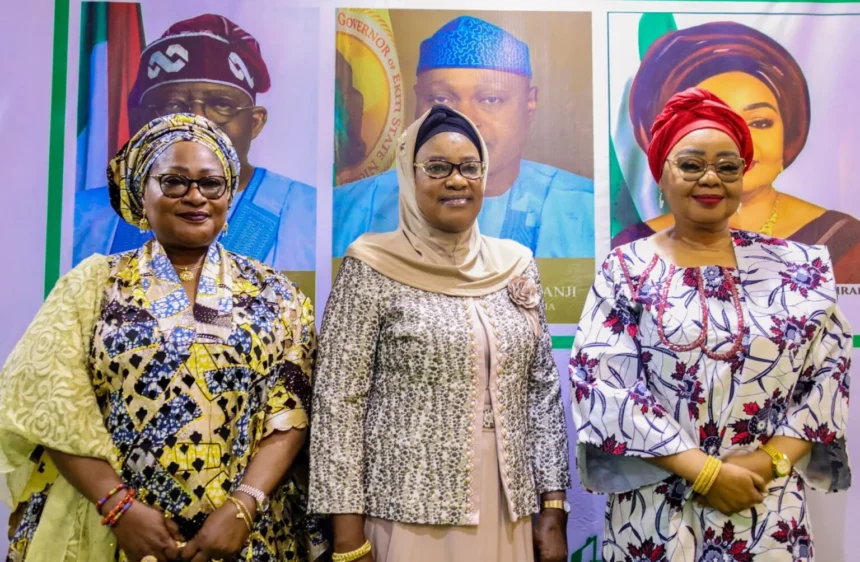
The event attracted notable personalities, including former First Lady of Osun State and wife of the Minister of Marine and Blue Economy, Mrs. Kafayat Oyetola, who attended as the special guest of honour.
In his goodwill message, Ekiti State Governor, Mr. Biodun Oyebanji, pledged his administration’s support for the commission’s efforts to reposition itself as a stronger and more impactful institution. Represented by the Secretary to the State Government, Prof. Habibat Adubiaro, the governor noted that the retreat’s theme resonates strongly with Nigeria’s aspirations for unity, justice, fairness, and equal opportunity for all citizens.
Oyebanji described the Federal Character Commission as a strategic institution whose role remains indispensable in promoting balanced representation, social justice, and national integration.
“The Federal Character Commission occupies a strategic position in nurturing national integration, promoting social justice and strengthening confidence in public institutions,” the governor said.
“At a time when Nigerians increasingly demand fairness, transparency and inclusiveness in governance, your work has never been more important. I urge participants to generate practical and innovative solutions that will further strengthen the commission’s effectiveness, credibility and public impact.”
The retreat featured robust intellectual engagements and high-level policy discussions aimed at strengthening the commission’s operational framework and public relevance.
One of the major presentations, delivered by Mr. Pam Botmang, focused on “The Constitutional and Statutory Framework of the FCC as a Panacea for National Equity and Cohesion in Nigeria.” The session examined the legal foundations of the commission and highlighted pathways for maximizing its role in promoting fairness and national balance.
Former Head of the Civil Service of the Federation, Prof. Oladapo Afolabi, also delivered a thought-provoking paper titled “Leadership, Public Trust and Institutional Renewal in the Public Service: Restoring Public Confidence in National Institutions.” His presentation underscored the importance of ethical leadership, transparency, accountability, and service delivery in rebuilding public trust in government institutions.
Participants equally explored successful reform models from other countries. Prof. Chris Kwaja of Modibbo Adama University presented insightful case studies on Rwanda’s institutional transformation journey, highlighting lessons that could be adapted to strengthen governance structures and national cohesion in Nigeria.
Adding an international perspective, Mr. Idowu Bakare, Clerk of the National Assembly Committee on Federal Character, examined institutional reforms through the lens of the United States model, providing comparative insights into how effective governance systems can enhance inclusion, representation, and public confidence.
Beyond policy discussions, the retreat is expected to foster stronger leadership cohesion within the commission, encourage innovative thinking, and produce actionable recommendations that will shape the FCC’s strategic direction in the years ahead.
Stakeholders at the event expressed optimism that the outcomes of the retreat would not only strengthen the commission’s operational efficiency but also reinforce its role as a critical institution for promoting national unity, equitable representation, and sustainable development.
As Nigeria continues to navigate complex social, political, and economic realities, the Federal Character Commission’s renewed commitment to institutional excellence and constitutional responsibility signals a determined effort to build a more inclusive nation where every citizen, regardless of geographical or ethnic background, has a fair opportunity to contribute to national progress.
With renewed vision, strengthened leadership, and a clear roadmap for reform, the FCC appears poised to play an even more significant role in advancing the ideals of justice, equity, and national integration that remain fundamental to Nigeria’s democratic development.