
Nigeria’s democratic journey, now spanning over two decades since the return to civil rule, has recorded notable milestones. Peaceful transfers of power, expanding political participation, and growing civic awareness are indicators of progress. Yet, a critical measure of democratic maturity remains insufficiently addressed, the inclusion of women in political leadership.
Women constitute nearly half of Nigeria’s population and contribute substantially to the nation’s economic and social fabric. Across sectors like agriculture, commerce, education, healthcare, diplomacy, and community development Nigerian women play indispensable roles. However, their representation in elective offices and high-level political decision-making remains disproportionately low.
This imbalance is not merely symbolic; it speaks to the depth and quality of our democracy.
Nigeria has affirmed its commitment to gender equity through its engagement with global and continental frameworks under the United Nations and the African Union.
These commitments reflect an understanding that inclusive governance strengthens democratic institutions, enhances policy outcomes, and promotes sustainable development.
Yet, translating international commitments into domestic political realities requires deliberate institutional reform.
The structural barriers limiting women’s political participation are well documented. Nigeria’s political space is resource-intensive and highly competitive. Campaign financing, internal party nomination systems and entrenched political networks often favor established actors, leaving limited room for broader inclusion. Socio-cultural perceptions further complicate this landscape, particularly in communities where leadership continues to be viewed through traditional gender lenses.
Addressing these barriers does not require rhetorical declarations but measurable action. Political parties must take the lead by strengthening internal democracy and implementing enforceable inclusion benchmarks. Nomination processes should be transparent and accessible. Consideration should also be given to reducing financial impediments that disproportionately affect women aspirants.
Legislative intervention may also prove necessary.
The National Assembly and state legislatures have an opportunity to initiate reforms that promote equitable representation while safeguarding merit and democratic choice. Incentive-based frameworks that reward inclusive party practices could mark a significant step forward. For instance, the Special Seats Bill before the National Assembly should be passed so as to increase women’s participation in governance and deepen our democratic experiment.
Importantly, the issue of women’s inclusion should not be framed as a sectional demand. It is a national development imperative. Evidence from emerging and advanced democracies alike suggests that inclusive governance correlates with stronger social policies, improved conflict resolution mechanisms, and greater public trust in institutions.
Nigeria’s present challenges economic reform, security stabilization, youth engagement, and institutional accountability require a broad spectrum of leadership perspectives. Excluding capable women from full political participation limits the nation’s policy capacity at a time when innovation and collaboration are most needed.
Democracy thrives not only on periodic elections but on representation that reflects the diversity of the governed. As Nigeria continues to consolidate its democratic institutions, expanding women’s political inclusion should move from aspiration to actionable policy.
The responsibility rests squarely with policymakers, party leaders, and electoral institutions to ensure that the promise of equal participation becomes reality. A democracy as vibrant and influential as Nigeria’s must draw from the full strength of its population.
In shaping the next phase of our national journey, inclusion must cease to be a peripheral conversation. It must become central to governance reform. The credibility and resilience of Nigeria’s democracy depend on it. Women’s Inclusion in Nigeria’s Democratic growth is non- negotiable in order to bring about equity, justice, fairness and all round National development.
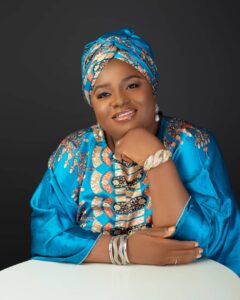
Ambassador Zainab Mohammed is a Pan-African Economic Transformation Advocate Women & Girls Inclusion Champion. Founder WCCI Emerging Market Hub, trade partnership without borders and Convener Pan African Cultural Diplomacy Platform.
Ambassador Zainab Mohammed Writes from Abuja